Orientation
Salvation, paperwork, and the apostolic theatre.
While the O.T.O.’s initiatory system is a sort of Kafkaesque bureaucratic club game, it has a religious association as part of its framework: The Gnostic Catholic Church.
One of the O.T.O. groups intends “to restore Christianity to its real status as a solar-phallic religion.” In addition to tax advantages, religion supplies a commodity that is always in demand: salvation. And it would seem that some O.T.O.-variations are simply making themselves bulletproof in the context of the law in some countries.
The technical term for the bishopric in the context of the O.T.O. Phenomenon is Wandering Bishop or Episcopus Vagans. This status is not defined by any character qualities, not by theological education or theological position. These bishops are not elected by a canonical church, nor ordained at the proposal of a suffragan, nor bound to a historical episcopal see or consecrated by an “official” bishop according to the canonical procedure.
A “real” bishop is not a successor of a sole apostle as only the synod/college of bishops in toto are heir to the college of the apostles. Therefore: no Wandering Bishop has a “real” apostolic succession. There is no Holy Ghost in Wandering-Bishop-consecrations.
The instrumentum consecrationis is of no apostolic value. Nonetheless, Wandering Bishops are collectors of papers and diplomas.
In all Ordo Templi Orientis versions, the line of succession is vitally important, as it is believed that the leader is the repository of the Order’s magical power, and also has a claim on various copyrights and royalties, especially of Aleister Crowley’s work.

Primary corridors
Ascetic roots, libertine claims, and several useful side doors.
- Spermo-Gnostics and the Ordo Templi Orientis — Introduction to the “Ascetic and Libertine Gnostics” [version July 99].
- The Secrets of the O.T.O.
- The Correct Gnosticism — the ascetic roots of the O.T.O.
- Smoke Gets In Your Aiwass — all about Angels and Abramelin [two parts].
- Anal Intercourse and the O.T.O.
Translations and parallel versions
- Italiano
- Français
- Deutsch
- Castellano
- Português
- Česká verze
- Română
- Le Gnosticisme Correct
- Gnosticismo Correcto
- Gnosticism corect
- XI° Русский
Stranded bishops
History of the Stranded Bishops.
Traduction française: Les Évêques Errants.
Siehe auch die deutsche Seite Ecclesia Gnostica Catholica.
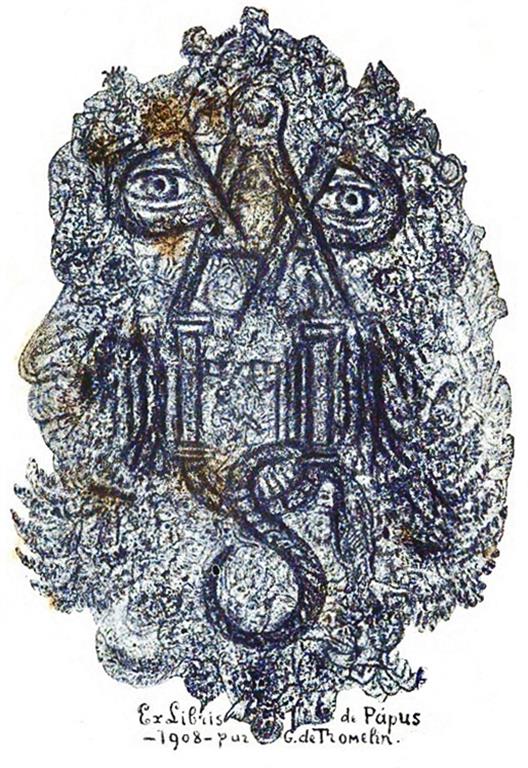
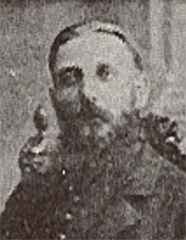
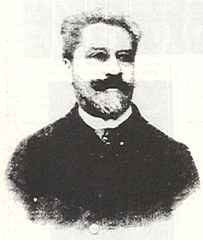
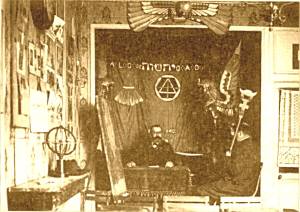
Doinel, Bricaud, Papus
The French gnostic revival.
J.S. Doinel: La gnose de Valentin, avril 1890.
This manifesto, written in April 1890 by Jules Stany Doinel — founder of the modern Église Gnostique — is an impassioned revival of the gnostic cosmology of Valentinus (2nd century CE). Addressed to the “brothers and sisters” of the newly founded Gnostic Church, the text elevates Valentinian gnosis as the culminating revelation of a broader esoteric awakening.
Doinel interprets the fin de siècle as a spiritual threshold: Kabbalah, Theosophy, and Astrology are undergoing a renaissance, and gnosis is presented as a timely response to the metaphysical void of modernity. His thought is embedded within the French occult milieu of the time, notably shaped by figures such as Papus.
At its core, the manifesto marks a radical departure from Christian orthodoxy: God, conceived as the “Abyss” (l’Abîme), is not the creator of the world — rather, the cosmos is the flawed product of a lesser being, the Demiurge. Valentinian theology is structured as a complex pleromatic emanation system, culminating in the tragic fall of the Eon Sophia into the realm of matter.
From an ideological standpoint, Doinel’s rigid tripartite anthropology — dividing humanity into Pneumatics (spiritual), Psychics (soul-based), and Hylics (material) — can be read as elitist and exclusionary. The condemnation of the “Hylics” echoes a clerical-gnostic logic of exclusion and reflects a self-reinforcing ecclesiastical worldview.
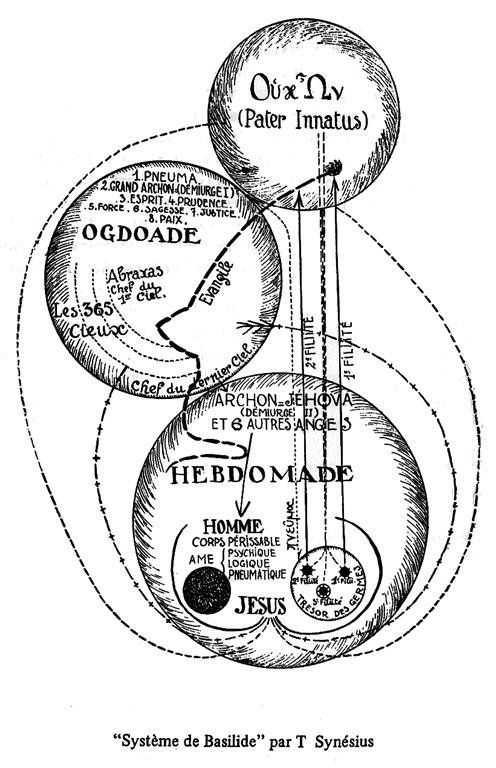
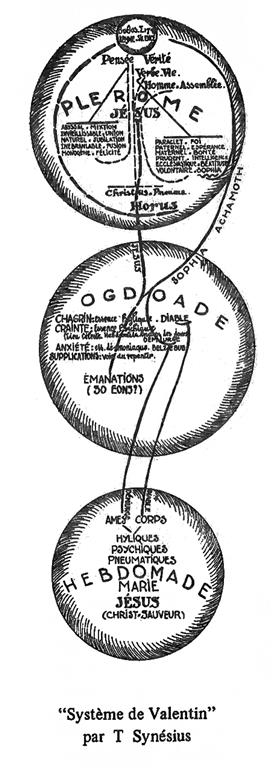
- Jules Stany Doinel: Première homélie, septembre 1890.
- Doinel: Restauration de la Gnose, septembre 1893.
- Doinel: La fraction du pain, mai 1894. English translation: Ritual of the Breaking of the Bread.
- Doinel: Mandement de sa Grâce, avril 1894.
- Doinel: L’appareillamentum, juin 1894.
- Doinel: Restauration de la Gnose, 1894, english PDF.
- Fabre des Essarts: Conciliation gnostique, mai 1895.
- Joannès Bricaud: Doctrine de la Gnose, 1907, english PDF.
- Bricaud: Homélie, février 1908.
- Bricaud: Profession de foi, 1908.
- Bricaud: Église Gnostique Universelle.
- Les statuts publiés dans La Gnose, revue officielle de l’Église Gnostique Universelle, fondée et dirigée par René Guénon (1909-1912): l’église de Fabre des Essarts / Synésius. Après une rupture cette Église devint l’Église officielle des Martinistes.
- S.-J. Esclarmonde: Bref Exposé De La Doctrine Gnostique, Credo gnostique, 1913.
Czesław Czyński — Punar Bhava, Martinism, Gérard Encausse — Papus, Mysteria, Oriflamme, Theodor Reuss, VII° Ordo Templi Orientis, Order of the Illuminati, Église Gnostique Universelle, Baphomet in Polen, Jan Korwin-Czarnomski, Mikołaj Mikołajewicz Czaplin, Stanisław Sławomir Jastrzębiec-Kozłowski.
- Rafal T. Prinke: Polish Satanism & Sexmagic. German version: Polnischer Satanismus und Sexualmagie.
- Czesław Czyński: Triomphe de l’occultisme. Preface by Gérard Encausse / Papus. A detailed account of the affair André Gilevitsch — Gilewicz.
- Zbigniew Lagosz: NA OBRZEZACH RELIGII I FILOZOFII CZESLAW CZYNSKI.
Visual archive
Documents and paintings.
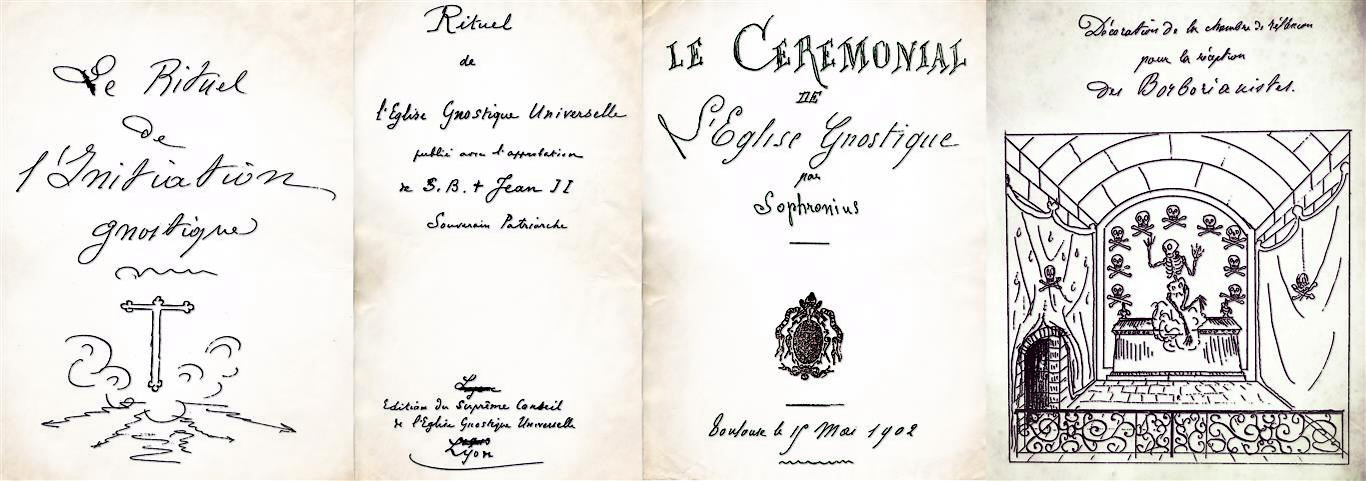
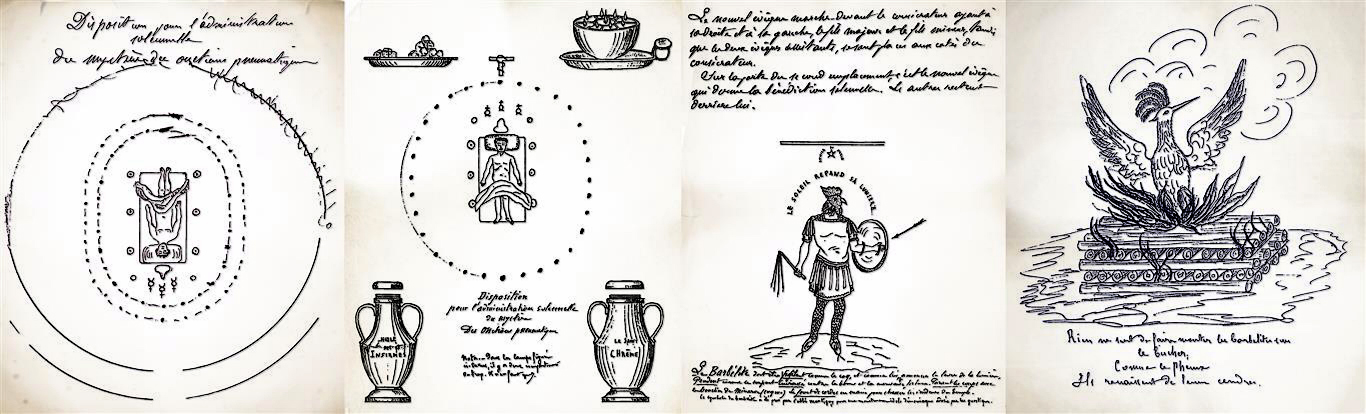
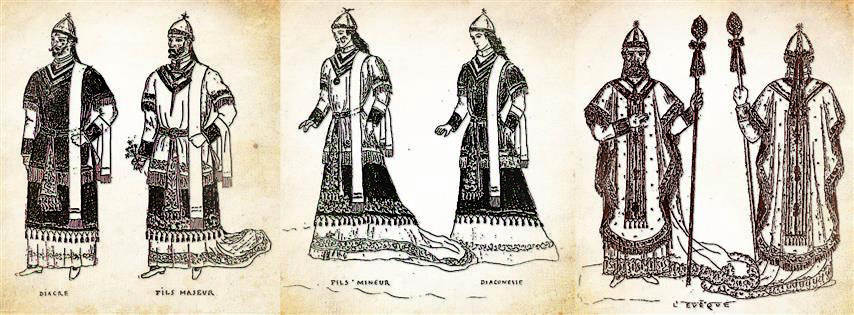
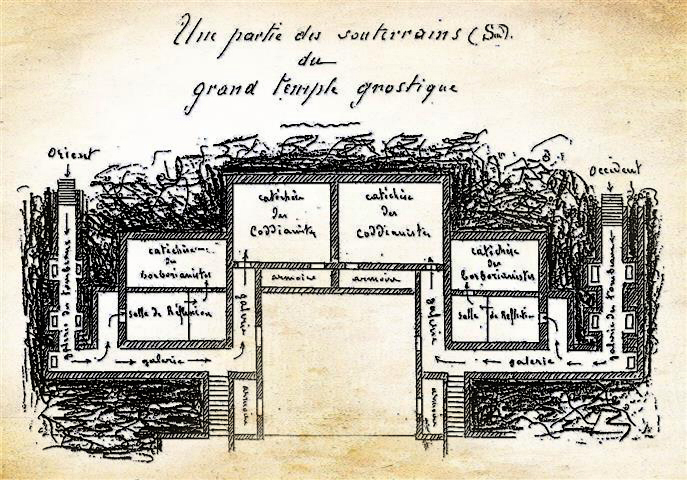
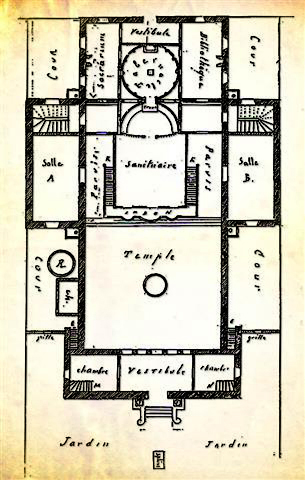
More Gnostic Catholic Church Texts and Paintings.
Theodor Reuss
The Gnostic Churches and the Reussian secret-machine.
Chevalier Le Clément de St.-Marcq: “L’Eucharistie”. About the Sacred Spermatophagy. Reuss said that this book of 1906 contained the ultimate secret of the OTO: the more sperm you eat, the more the manifestation of the Christ takes place within you: no women necessary for that.
Facsimile re-printed in: P.R. Koenig: “Der Grosse Theodor Reuss Reader”, ARW, München 1997; Reuss called this pamphlet a revealing of the central secret of the OTO: only sperm contains the Logos: no women needed. Reuss wrote to Le Clément the following meaningful lines (we carefully reproduce his jargon): “I enclose two numbers of the ‘Oriflamme’ which will show you that the Order of the Oriental Templars is in possession of that same knowledge contained in your ‘L’Eucharistie’”.
In effect, we find in the “Oriflamme”, published in 1912, this, which clears the matter: “Our Order is in possession of the key which opens all the masonic and hermetic secrets: it is the doctrine of sexual magic, and this doctrine explains, leaving nothing in the dark, all masonic symbolism, every religious system”. The quote is in chapter X (La question du satanisme) of René Guénon’s L’Erreur Spirite, originally published in 1923.
- Rôle-model for Reuss’/Crowley’s Gnostic Mass: The Tridentine Ritual.
- Theodor Reuss and Aleister Crowley. Preface: Die Gnostische Messe.
- The Gnostic Neo-Christians (1917).
- The True Secret of Freemasonry and the Mystery of the Holy Mass (manuscript of approx. 1917).
- Theodor Reuss’ invitation: Congress der Foederation der Universellen Freimaurer, 1920: Joanny Bricaud’s proposal to make Reuss’/Crowley’s Gnostic Mass the central religion of all 18° Freemasons.
- Programme of Construction and Guiding Principles of the Gnostic Neo Christians called O.T.O. (printed 1920).
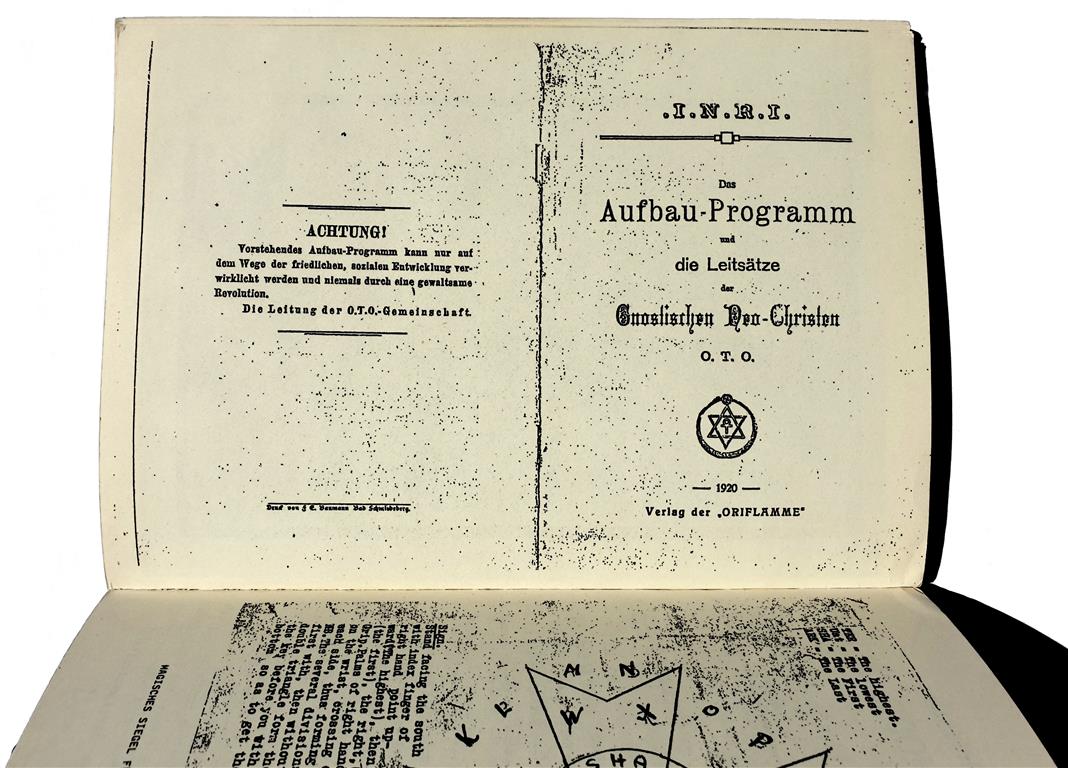
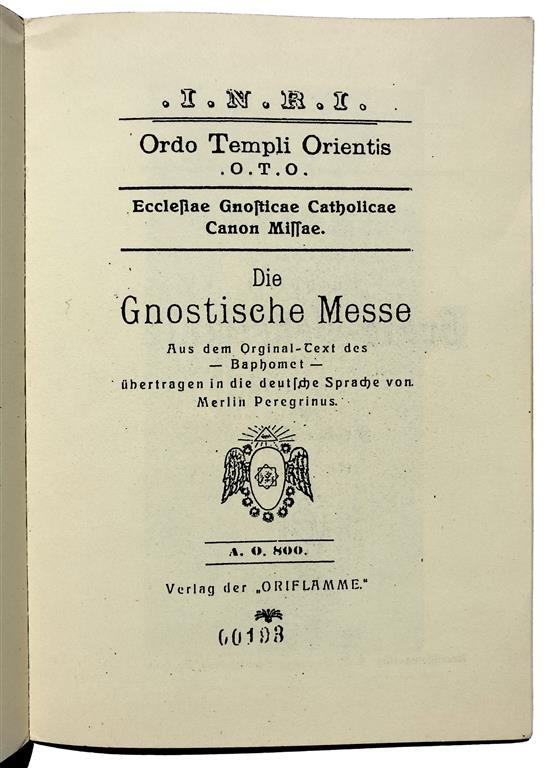
[From: Der Kleine Theodor Reuss Reader]
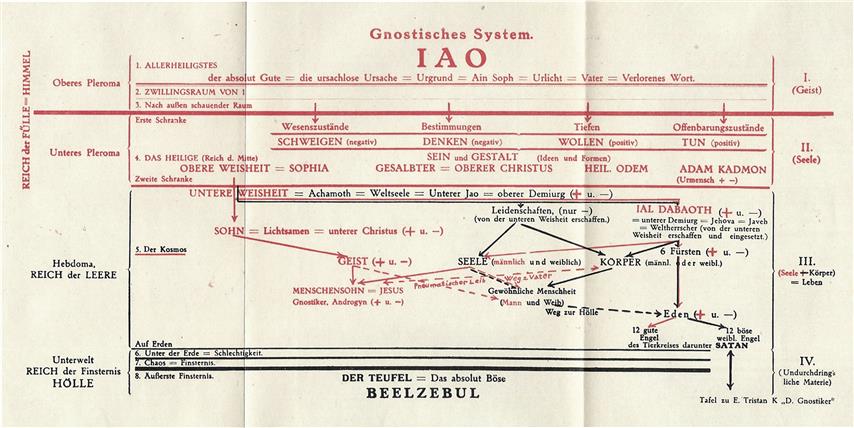
Ernst Tristan Kurtzahn, Mitglied von Reuss’ O.T.O.: Die Gnostiker und die Unsichtbare Kirche [1925]. English translation: The Gnostics. — About the Gnostic Catholic Church, Androgyn + Gynandria, E.C.H. Peithmann, Peryt Shou, and the immissio membri virilis in vaginam in avoidance of the ejaculatio seminis.
- Stephan Hoeller: Position Paper Concerning the Thelemite or Crowleyan Gnostic Churches. About the importance of magical succession without schisms; about valid and proper intention of consecrations, and that one Mass no Church doth make.
- Study a version of Stephan Hoeller’s Mass that was modified by the EGA’s late Primate, Roger St. Victor Herard (Tau Charles).
- Facsimile of the originals of above texts can be found in Ecclesia Gnostica Catholica.
- Some of them were scanned and converted to text by Stephen L***. Homepage: Maps and Magick.
- Aleister Crowley appointing William B. Crow Patriarch of the thelemic Gnostic Catholic Church.
Succession
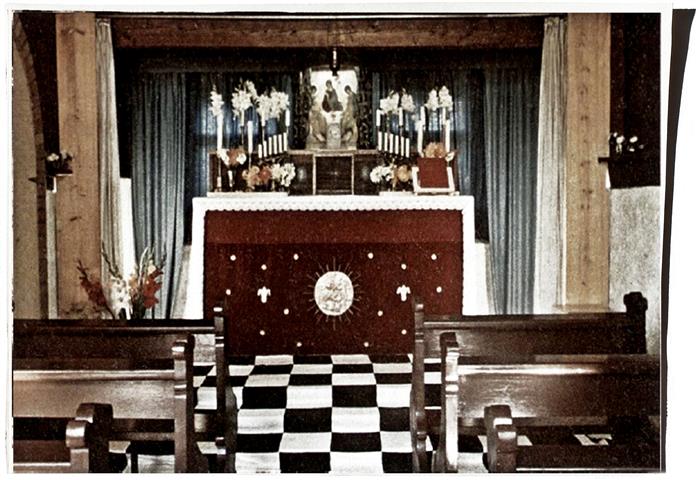
Lines, charts, altars
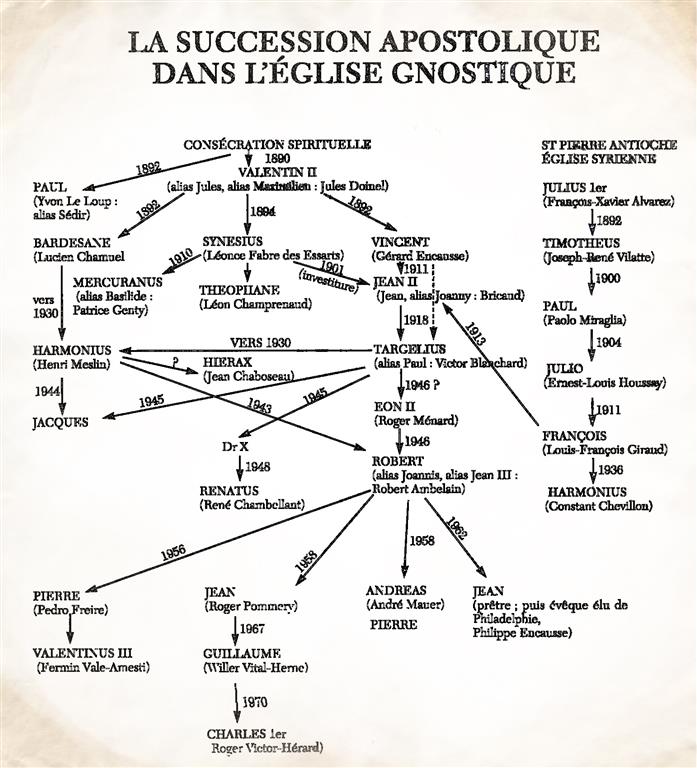
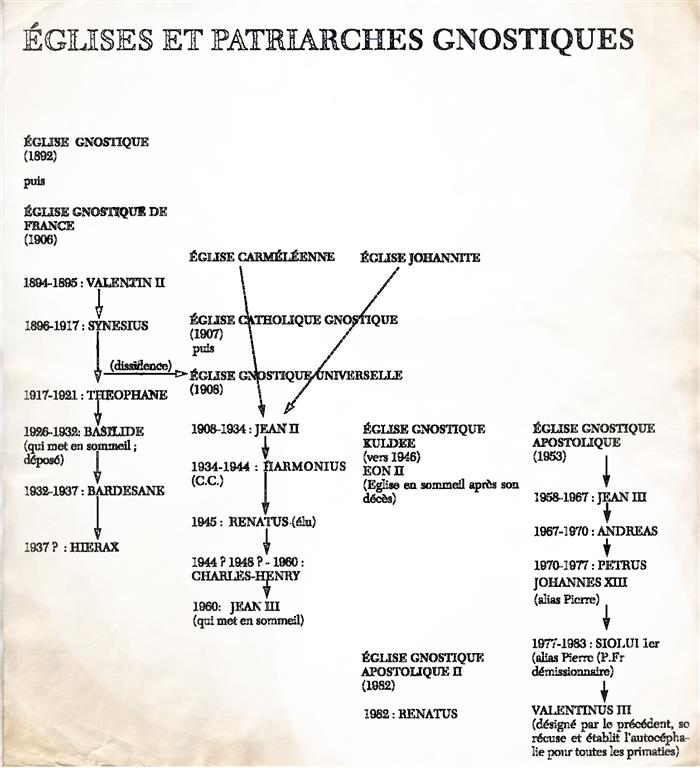
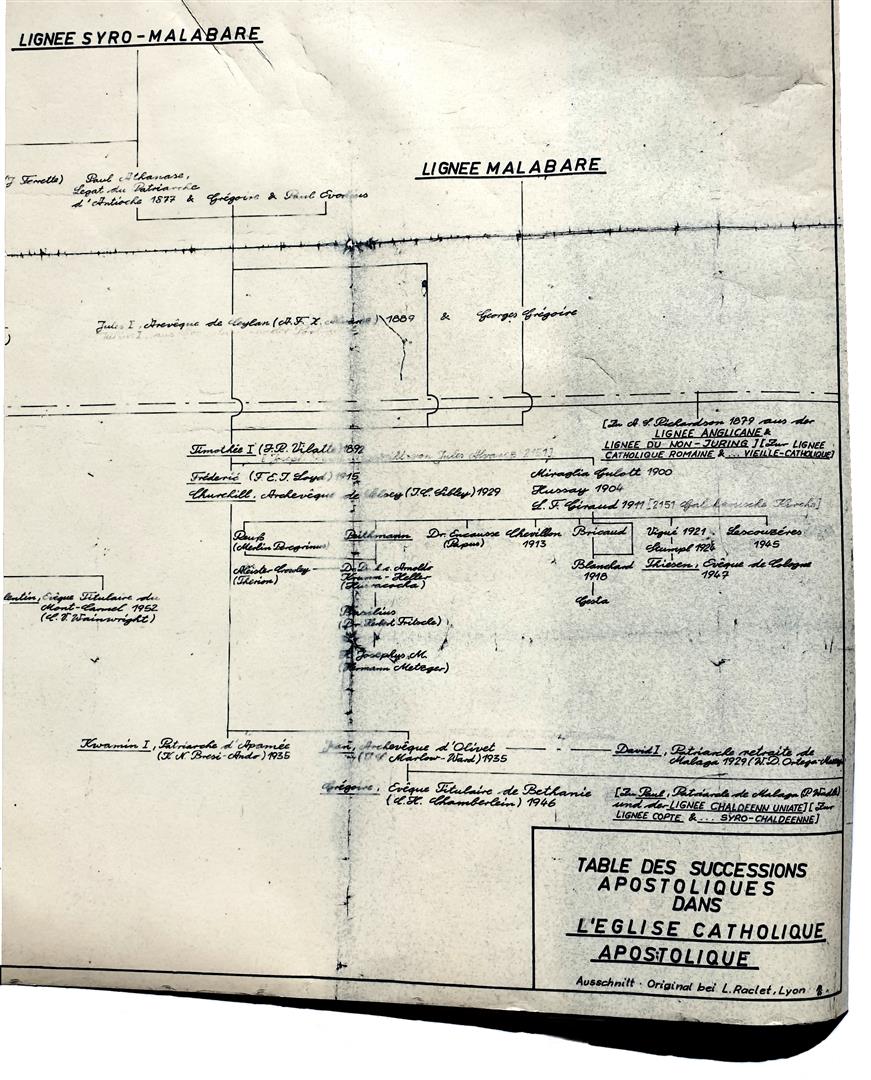
At various times the media published photographs of Hermann Joseph Metzger’s altar of the Swiss Gnostic Catholic Church.
A gallery with photographs of some protagonists.

Other O.T.O.-versions
Charters, lineages, and related organisations.
- The Threepenny Gnostic Opera with charters of e.g. Manuel Cabrera Lamparter, William Wallace Webb et. al.
- The Gnostic Lineages of the O.T.O.A. and related organisations and Churches.
- Der O.T.O.A.-Reader contains a lot of further picture material.
- “Ljuben je zakon” or “ljubav pod voljom”? O.T.O. and O.T.O.A. in former “Yugoslavia”.
- O.T.O. groups and O.T.O.A. in Italy.
- My O.T.O.A. 1987-1991.
- How William Breeze lost an Apostolic Succession.
Fraternitas Rosicruciana Antiqua
Krumm-Heller, Brazil, and the two masses.
- Ein Leben für die Rose — Arnoldo Krumm-Heller’s Gnosticism plus a description of Reuss’, Crowley’s and Krumm-Heller’s spermo-gnosis: a comparison with the Fraternitas Saturni.
- Arnoldo Krumm-Heller’s Gnostic Mass for the Fraternitas Rosicruciana Antiqua.
- Conqueror of the Grail — Arnoldo Krumm-Heller.
- Le conquérant du graal
- Завоеватель Грааля
- Correct Gnosticism
- Gnosticisme Correct
- Gnosticismo Correcto
- Gnosticism corect
- Misa Gnóstica
Versão moderna da Missa Gnóstica em português (década de 1990).
The two extant versions of the Gnostic Mass differ not only in language — Portuguese in Brazil and Spanish in Krumm-Heller’s own version — but also in structure and emphasis. The newer Brazilian version, circulated within the Igreja Gnóstica do Brasil, is highly formalized liturgically, resembling a Catholic High Mass in its sequence. It includes acolyte, deacon, processional entry, offertory, sermon, and a clearly defined canon with hinos, whose texts are even fixed in musical notation. Theologically, it incorporates elements of Theosophy and Saint Germain, explicitly invokes Baphomet, and stresses formulations such as the “law: Light, Love, Life, Liberty and Triumph.” It thus appears as a theosophical Rosicrucian adaptation of the rite.
Krumm-Heller’s Spanish version, by contrast, is shorter and less formal. It is built around invocations such as “Ven, oh Santa Palabra” or “Ven, tú madre de los siete centros,” linking the figure of Christ with a mysticism of the chakras and the “seven centers.” Instead of a solemn structure with precise rubrics and hymns, it presents an esoteric-Christian gnosis. The orientation is more explicitly Christocentric, with the officiant performing gestures and signs without carrying the full weight of Catholic symbolism.
In sum, the Brazilian Mass represents a highly ritualized, theosophical-Rosicrucian adaptation, while Krumm-Heller’s Spanish text embodies a more initiatory and mystical, Christocentric rite, less bound to formal liturgical structure.
Fraternitas Saturni
Golems, monasteries, and the Saturnian gnostic aspect.
- The Creative Power. Golems and Homunculi.
- Traduction française: Le pouvoir créateur.
- Traducere în română: Putera Creatoare.
- По русски: Творческая Сила.
- See also: Too Hot To Handle.
- The gnostic aspect of the Fraternitas Saturni: Eugen Grosche: Die Sakralen Kulte der Loge, 1930 (About Chrestos).
- Eugen Grosche: Das Weltliche Kloster, 1953 (About the Saturnian Monastery).
Books
Printed dossiers and facsimile reservoirs.
- Materialien zum O.T.O. — facsimiles of documents including the Order’s degree system, Reuss’s charters, the Gnostic Mass in Brazil, the Eucharist in Brazil, and Michael Bertiaux’s Gnostic Church.
- Der Grosse Theodor Reuss Reader — facsimile material only, such as Theodor Reuss’s translation and collaboration on Liber XV, the Gnostic Mass of the Ordo Templi Orientis, presented as a facsimile of the 1917 German version.
- Reuss’s and Crowley’s Gnostic Mass also appears in O.T.O. Rituals and Sexmagick.
- Preface of the book Ecclesia Gnostica Catholica.