Egyptian rites, irregular papers, and the O.T.O. prelude
The Egyptian Rite of Misraim, also spelled “Mizraim”, is generally said to have been established in Milan in 1805 before being introduced to France in 1814. It was never officially recognised by mainstream Freemasonry. In 1862, a separate and equally irregular order, the Rite of Memphis, emerged in the United States. This system, also referred to as the “Antient and Primitive Rite of Masonry” or the “Oriental Order of Memphis”, developed independently from the Misraim Rite.
On 4 June 1872, former Freemason John Yarker obtained authorisation to establish the Memphis Rite in England. Under his leadership, the Memphis and Misraim Rites were merged, forming what came to be known as the Antient and Primitive Rite of Memphis and Misraim, or simply Memphis-Misraim.
Reportedly, on 24 September 1902, German occultist Theodor Reuss secured permission from Yarker to introduce both the Ancient and Accepted Scottish Rite (AASR, 33 degrees) and the irregular Memphis-Misraim Rites (90 and 97 degrees) in Germany. However, Yarker had previously been expelled from regular Freemasonry by order of the Supreme Council following a ruling by a Sovereign Tribunal in Manchester on 18 November 1870.
Reuss later published what he claimed was a transcript of his charter in his private magazine, Oriflamme. The December 1902 issue referenced the 33rd, 90th, and 96th degrees, yet the original document only acknowledged degrees 30–33, without explicit mention of Memphis-Misraim. Despite this discrepancy, Reuss assumed the authority to initiate Freemasons through a synthesis of multiple orders. By 1917, he had incorporated selected AASR and Memphis-Misraim degrees into the Ordo Templi Orientis (O.T.O.), which he had founded in 1906.
The Memphis Rite was variously known as the “Antient and Primitive Rite of Masonry”, the “Oriental Order of Memphis”, and, occasionally, the “Oriental Templars”. Reuss’s precise affiliations remain ambiguous, as do the interrelations between these esoteric bodies. Membership in the O.T.O. did not necessarily confer membership in the Memphis-Misraim Rite.
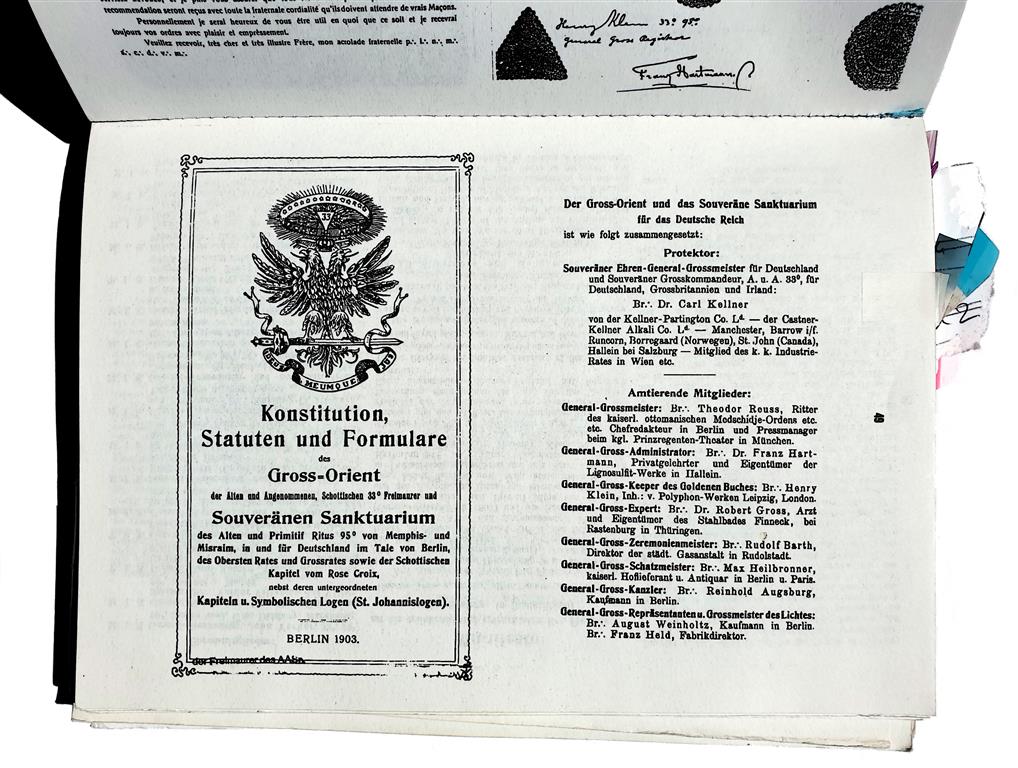
For further insights into Memphis-Misraim, often treated as one of the progenitors of the O.T.O., the following texts and facsimiles gather the relevant documentary debris into a usable order.
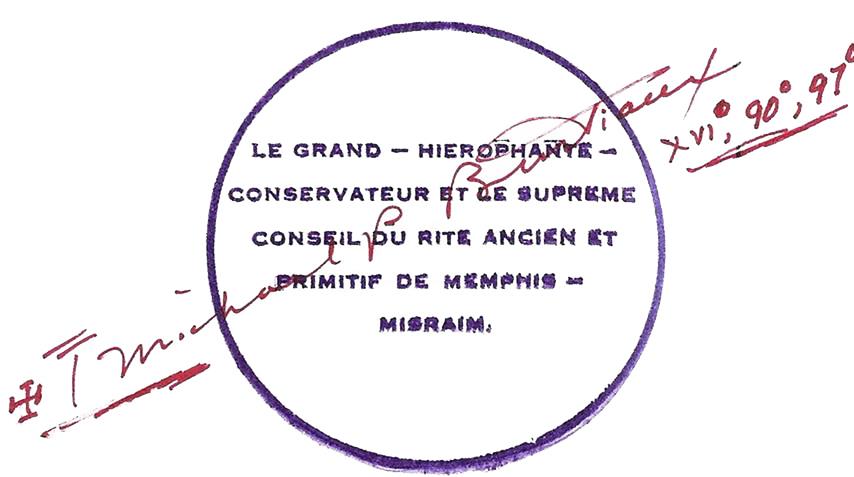
Seals, emblems, and documentary fragments
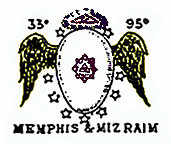
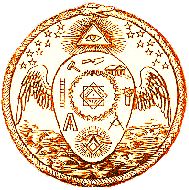

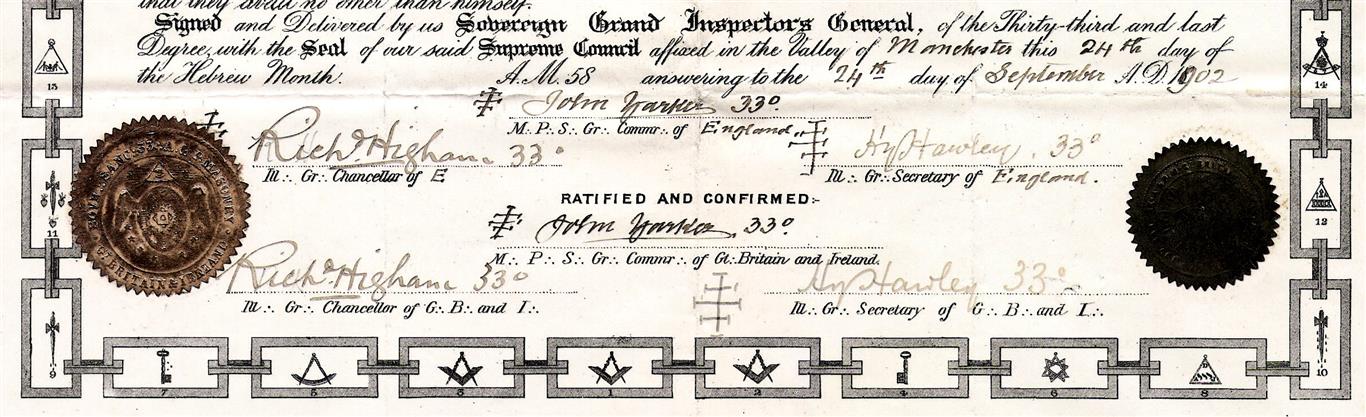
Pre-Ordo Templi Orientis
Ordo Templi Orientis
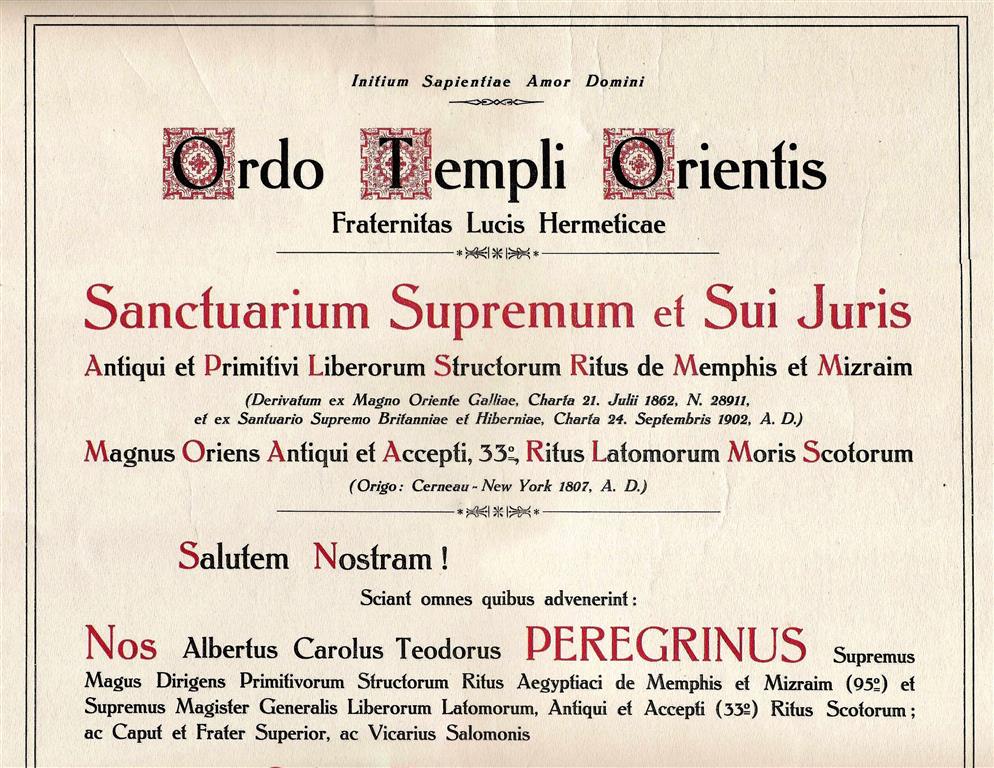
O.T.O. early years, Steiner, facsimiles, and side-documents
Ordo Templi Orientis: early years and development
- English version: O.T.O. — Early Years and Development.
- Deutsche Version: Zur Geschichte des Ordo Templi Orientis.
- Versione italiana: Ordo Templi Orientis — I primi anni e la sua evoluzione.
- Traduction française: L’ancien O.T.O. et son évolution.
- Traducción castellana: O.T.O. — Original y su Desarrollo.
Rudolf Steiner
- Rudolf Steiner: Not a member of the O.T.O.
- Deutsche Version: Rudolf Steiner: niemals Mitglied irgendeines O.T.O.
- Dutch version: Theodor Reuss en Rudolf Steiner
- Traducere română: Rudolf Steiner: niciodată membru al vreunui Ordo Templi Orientis
Online facsimile documents regarding Theodor Reuss and Rudolf Steiner.
Gallery of documents concerning Theodor Reuss.
Documents in the context of the Monte Verità.
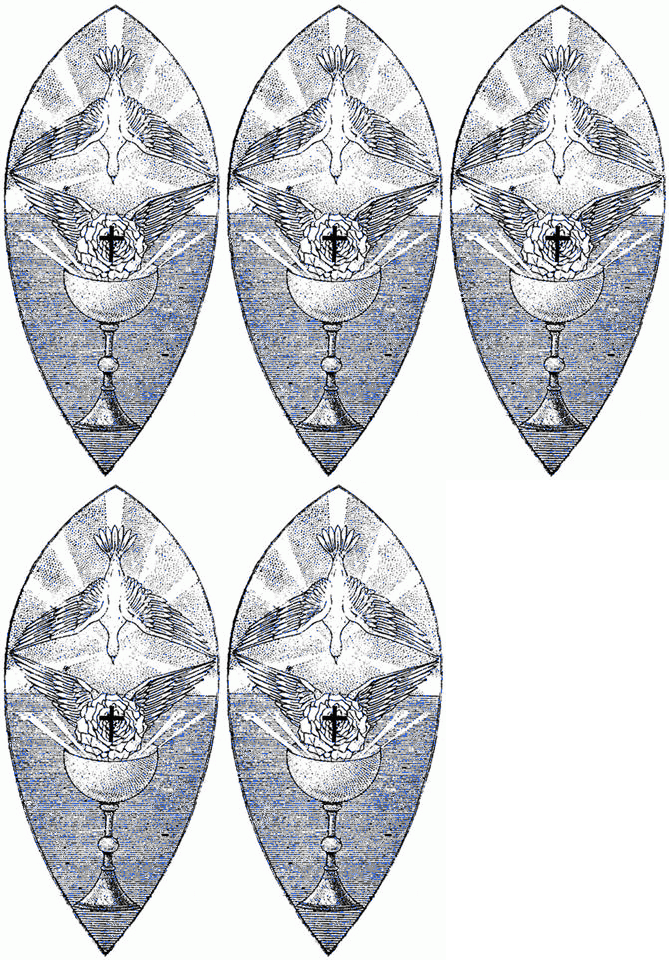
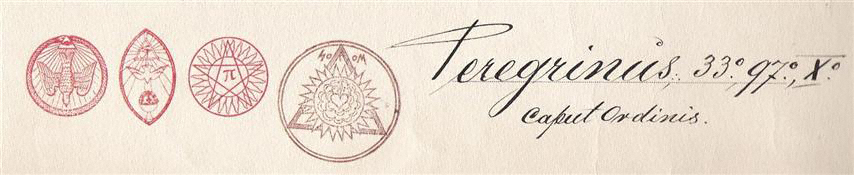
Some examples of Memphis-Misraim diplomas and charters.
“Deserving Death”: Hans F. Senkel. Memphis-Misraim in Hamburg.
Michael Paul Bertiaux
Ordo Templi Orientis Antiqua — A Gnostic Inflation: Michael Bertiaux’s Memphis-Misraim version.
Der O.T.O.A.-Reader contains further picture material.
Photos of Hector-François Jean-Maine, Michael Paul Bertiaux, Marc Lully, and two Gnostic Masses.