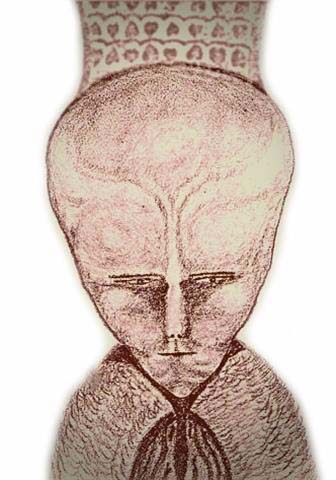

The Typhonian argument
Grant’s O.T.O. is presented less as a conventional order than as a current, a set of practices, a line of magical interpretation, and a particularly fertile problem for institutional succession narratives.
Kenneth Grant’s typhonian Order (often referred to as the typhonian O.T.O.) presents itself as a vehicle for transmissions from beings in outer space and for the opening of Gateways. Its pantheon of deities presides over operations of psycho–physical alchemy — in effect, sex–magical practices — that employ subtle essences or elixirs secreted by the vagina, termed kalas in Grant’s Tantric borrowing. This formula, while nominally associated with the XI°, diverges sharply from Aleister Crowley’s XI°, since the male body is entirely devoid of kalas. By privileging this dimension, Grant sets his system apart from Crowley’s without abandoning the claim to be its esoteric continuation.
From this premise he extends his argument to the idea of a magical current within the O.T.O., a current retrospectively traced from Carl Kellner to Theodor Reuss, from Reuss to Aleister Crowley, and finally to himself. Yet to treat the O.T.O. in terms of linear descent is misleading, for the Order fractured repeatedly and generated competing O.H.O.s [Outer Heads of the Order]. What Grant sought to preserve was therefore not purity of lineage but continuity of creative and magical work. His emphasis shifts the debate from historical succession to the living practice of esoteric transformation.
On this basis, the typhonian Order differs most radically from other O.T.O. bodies. It maintains no collective rituals and no ceremonial initiations; instead, its grades rest on the assimilation of magical and mystical practices. Initiation thus becomes essentially self–initiation, supported only by fragments of grade–work and by the testimony of others, yet always demanding that the initiate chart an individual course. The absence of ceremonial cohesion is presented not as deficiency but as a deliberate strategy, placing responsibility on the aspirant and underscoring the Order’s emphasis on interior, rather than institutional, transformation.
This orientation is formalized in Grant’s 1952 manuscript Key to the Pyramids, his organisational plan for the English O.T.O. The text frames the Order as a graded curriculum uniting study, practice, and mystical initiation, unfolding as a nine–tiered pyramid. The lower degrees emphasize the study of Western and Eastern esoteric traditions; the middle degrees focus on symbolic construction — temples, yantras, pantacles — which embody doctrine in tangible form; the higher degrees require astral projection, the consecration of light, and the assimilation of the formula 0=2 as doctrinal keystone. At the summit, however, Grant breaks with Crowley most decisively: where Crowley placed sexual mysteries, Grant installs silence. This deliberate reticence produces an aura of mysticism that withholds specific content while magnifying symbolic gravity.
Through this transformation, Grant renders his O.T.O. more accessible to a wider, intellectually and esoterically inclined audience, yet without dissolving its hierarchical structure. Records must be kept, theses defended, examinations passed, and oaths of obedience sworn; progression depends not only on inspiration but also on the discipline imposed by a Superior. Financial obligations are minimal, limited to voluntary contributions, which underscores that authority is enacted through symbolic and initiatory, rather than economic, means.
Grant understood himself not merely as the custodian of Crowley’s legacy but as its interpreter and transformer. He repositions the O.T.O. as a “university of mysteries,” where discipline and creativity converge, and where Thelemic doctrine is infused with cosmic scope, syncretic density, and modern force. By constructing this edifice, Grant claims for himself the rôle of architect and keyholder — the one who alone possesses the true key to the pyramid of the O.T.O.
Karl Germer was never truly in agreement with any of this. In 1955 he expelled Grant from the Order.
Later, namely in 1977, Kenneth Grant’s Nightside of Eden presents itself as both a continuation and a radicalization of the Thelemic current opened by Aleister Crowley. Its point of departure is Crowley’s Liber 231, which addresses the “bright side” of the 22 paths of the Tree of Life. Grant, however, turns deliberately to the repressed night side — the Qliphoth and the Tunnels of Set.
Both Crowley and Grant share the conviction that the essence of gnosis lies in sexual magic. Yet Grant interprets virtually all symbols in psycho–sexual terms — from uterus and menstrual blood to semen and hymen — thereby pushing Crowley’s taboo–breaking further into the chthonic and the transgressive. At the same time, he rejects the Masonic–patriarchal structure of the O.T.O. that Crowley had preserved as a relic of the Aeon of Osiris. Instead, he proclaims a circular, female–matriarchal O.T.O. under the sign of the primordial goddess and the Aeon of Horus.
This redefinition he frames not as a rupture but as a spiral development. Karl Germer appears in this scheme as the faithful yet rigid custodian who maintained the old form without creative renewal. Grant, by contrast, presents himself as the necessary innovator and true fulfiller, establishing a parallel line of authority: Crowley as revelator, Germer as guardian, and Grant himself as prophet of the Aeon of Horus. In this rôle he integrates the repressed and styles the perilous journey through the night side as the exclusive hallmark of initiation.
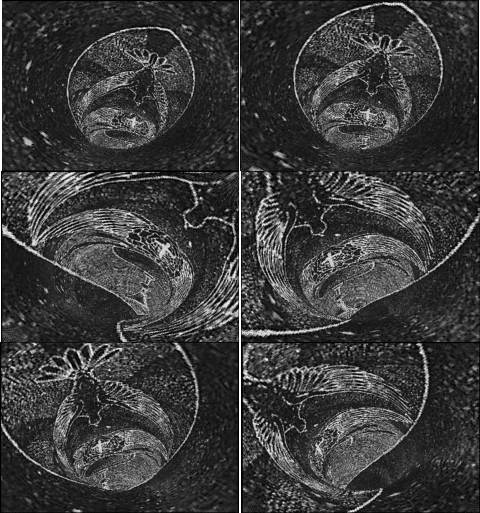
Secrets and neighbouring materials
Some secrets of the Ordo Templi Orientis and related organisations.
Biography of Aleister Crowley
- English version: Aleister Crowley — A Biography
- Deutsche Version: Aleister Crowley — Eine Biographie
- Traduction française: Aleister Crowley — Une biographie
- Versione italiana: Aleister Crowley — Biografia
Historical background
Articles, translations, statements, quarrels, and the usual documentary machinery by which an occult current tries to become a history.
Grant, Lam, and the first line of argument
- Peter-R. Koenig: Kenneth Grant and the O.T.O.
- Tradução portuguesa: Kenneth Grant e a O.T.O. Tifoniana.
- КЕННЕТ ГРАНТ И.: ТИФОНИАНСКИЙ ОРДЕН ХРАМА ВОСТОКА.
- Peter-R. Koenig: Plan 93 From Outer Space.
- Tradução portuguesa: Plano 93 do Espaço Exterior.
Manifestos and early documents
- Eugen Grosche / Gregor A. Gregorius: (Fraternitas Saturni) Eindeutschung von Kenneth Grants O.T.O.-Manifest von 1955.
- Kenneth Grant: Manifesto da Ordem Interna "O.T.O." Orientis Britânia 1955.
- Kenneth Grant's official statement "Concerning New Isis Lodge OTO", dated October 1999.
Michael Staley: historical materials
- Michael Staley: A Brief History.
- Tradução portuguesa: Uma Breve História.
- Michael Staley: The OTO After Crowley.
- Michael Staley: It's An Ill Wind That Bloweth ....
- Tradução portuguesa: É Um Vento Ruim que Sopra ...
Succession, hoax, apology
- History of a Hoax: Aleister Crowley appointing Kenneth Grant as his "successor as Outer Head of the Order of the Templi Orientis" in 1947 ?
- The official comment of the typhonian O.T.O. in 1998 [Michael Staley].
- Tradução portuguesa: Um Instrumento de Sucessão.
- Michael Staley's Apology.
Kenneth Grant died on 15th January 2011.

Documents, designs, interruptions
The visual documentary layer: sigils, letters, Grant/Germer material, and the paper trail through which authority becomes fragile, quotable, and occasionally rather inconvenient.
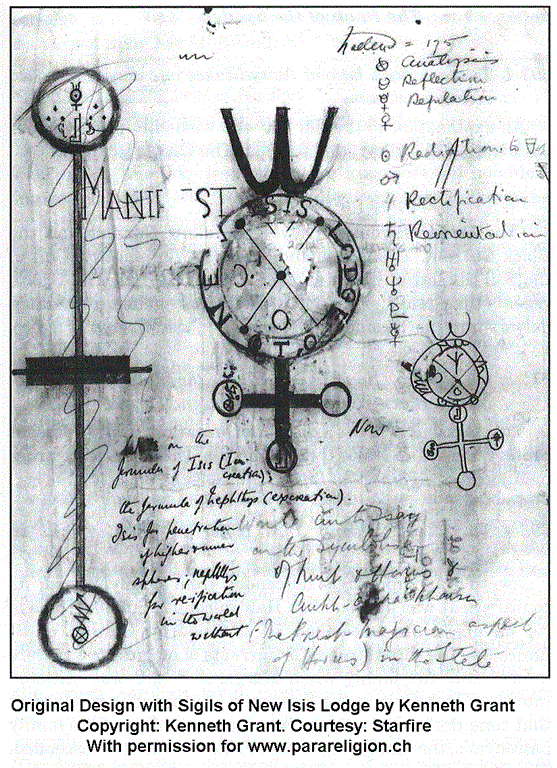
Original Design
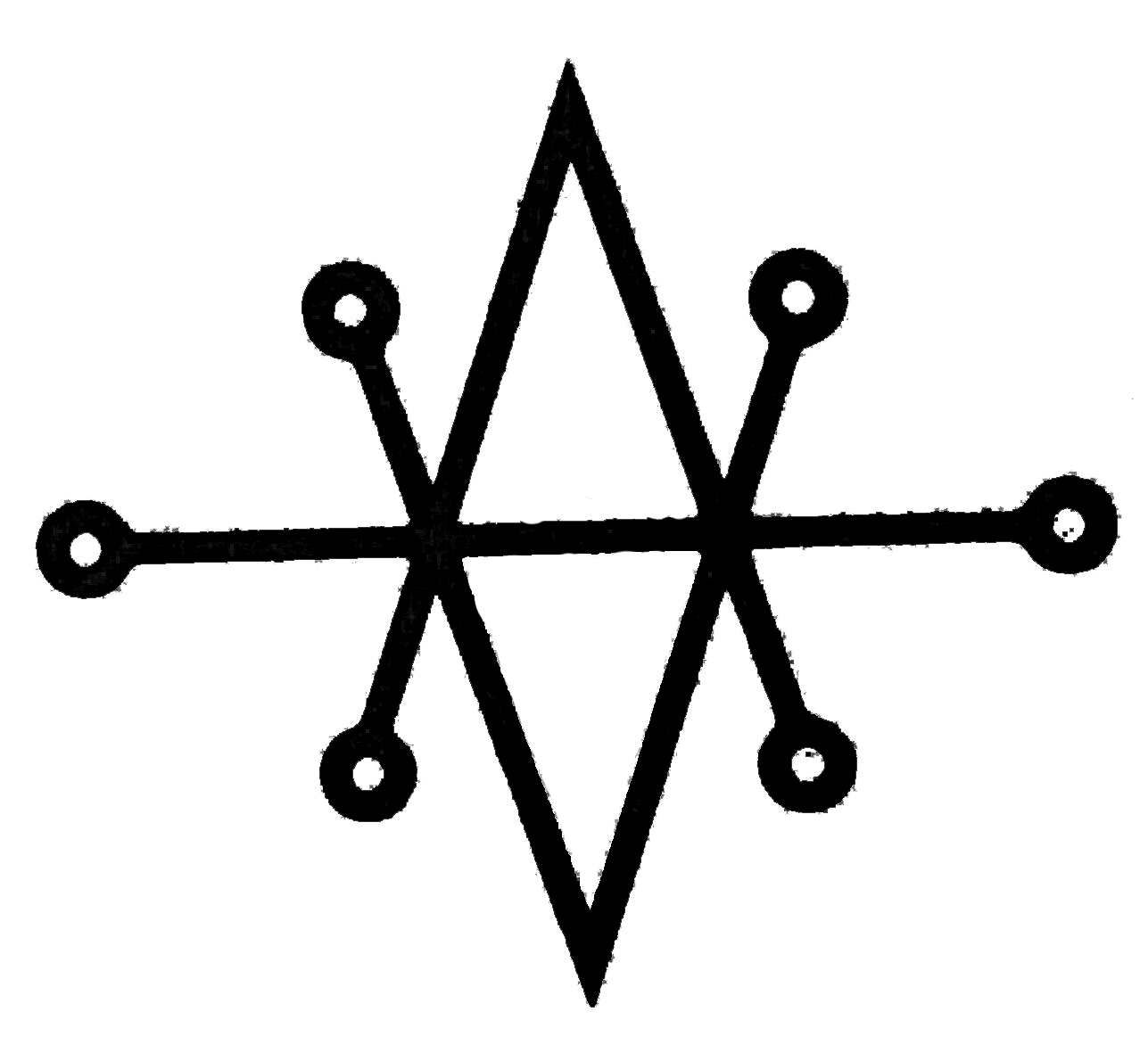
with Sigils of New Isis Lodge
by Kenneth Grant.
(Reproduced with permission).
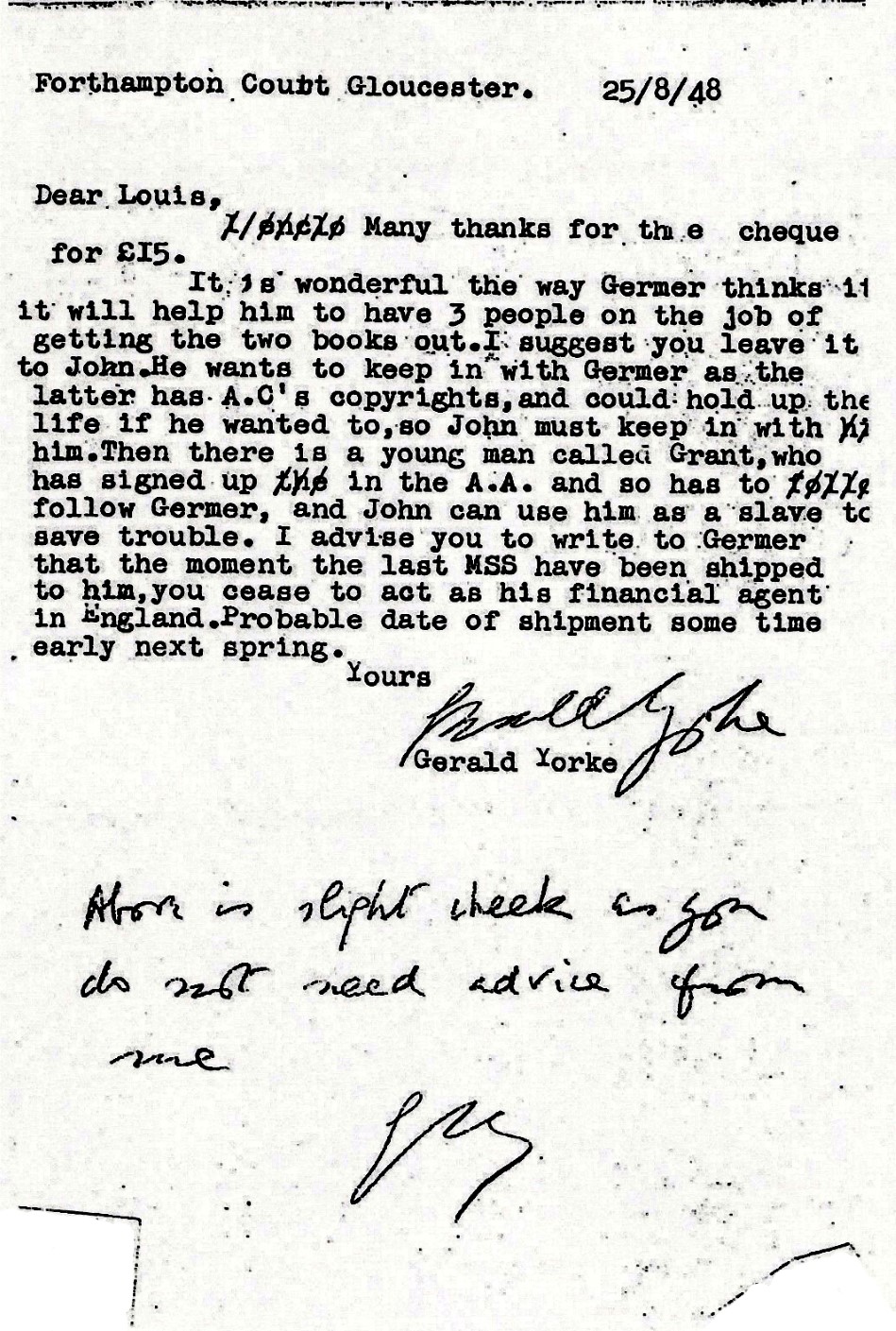
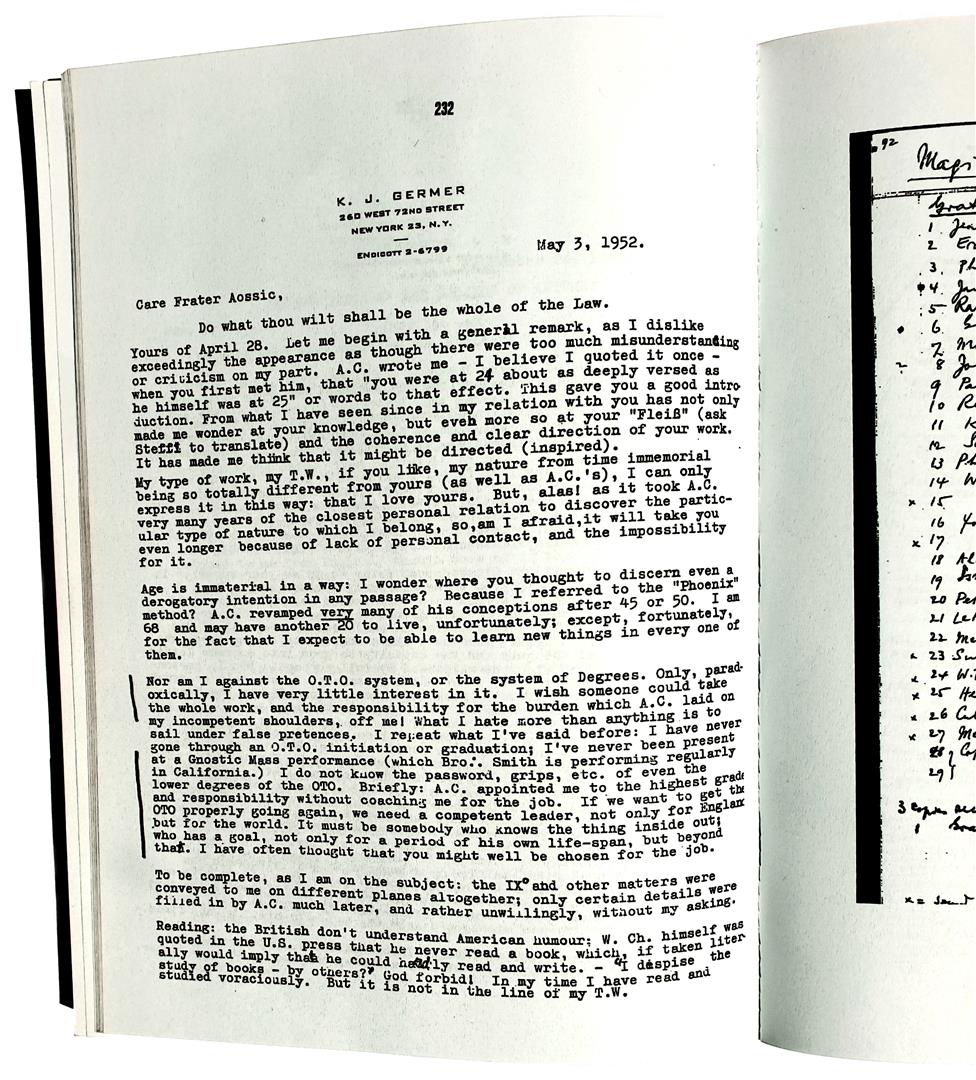
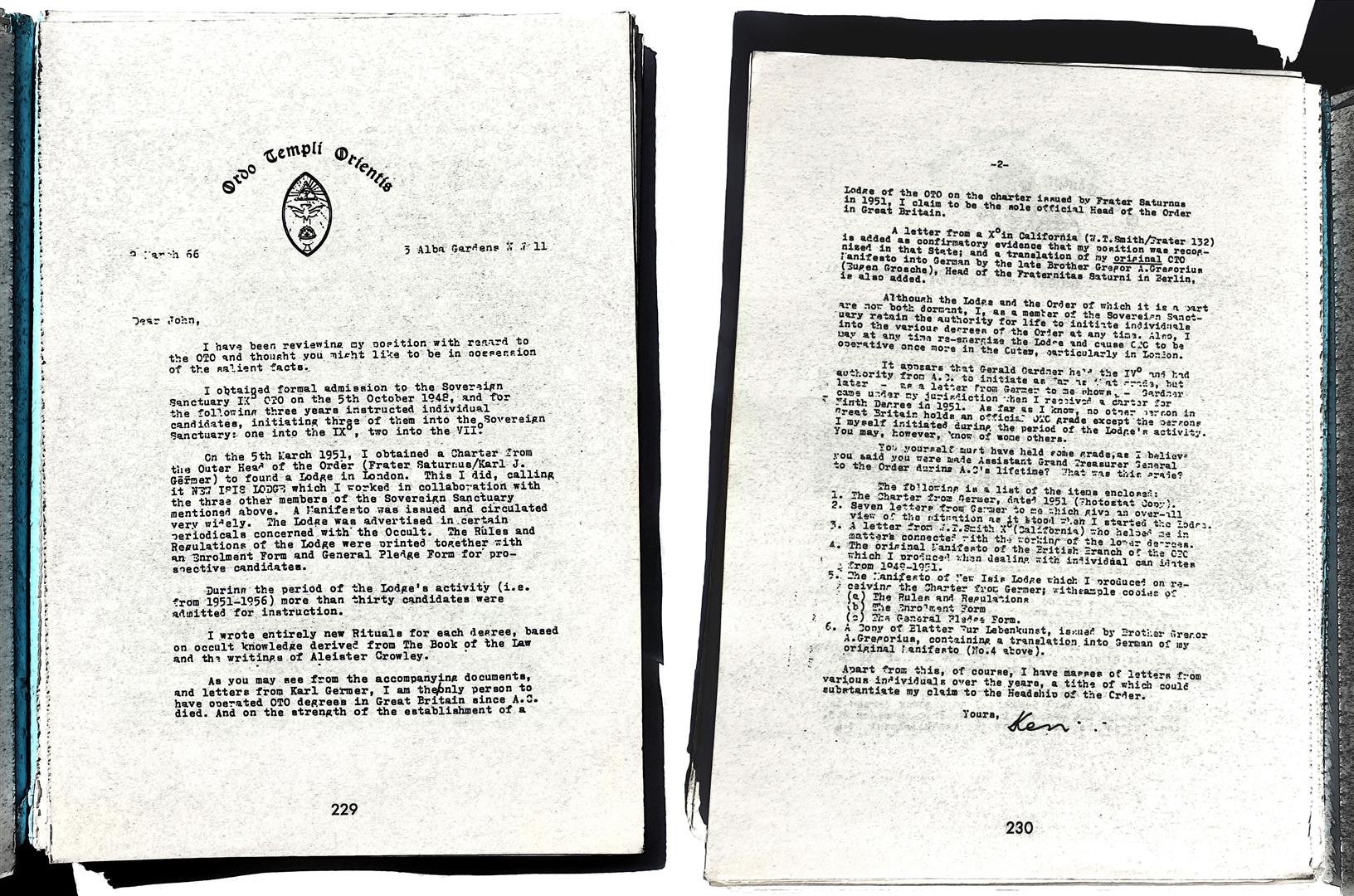
On 3rd May, 1952 Karl Germer (Saturnus) wrote to Kenneth Grant (Aossic), saying: “Nor am I against the O.T.O. system, or the system of Degrees. Only, paradoxically, I have very little interest in it. I wish someone could take the whole work, and the responsibility for the burden which A.C. laid on my incompetent shoulders, off me! [...]. If we want to get the O.T.O. properly going again, we need a competent leader, not only for England but for the world. [...]. I have often thought that you might well be chosen for the job.”
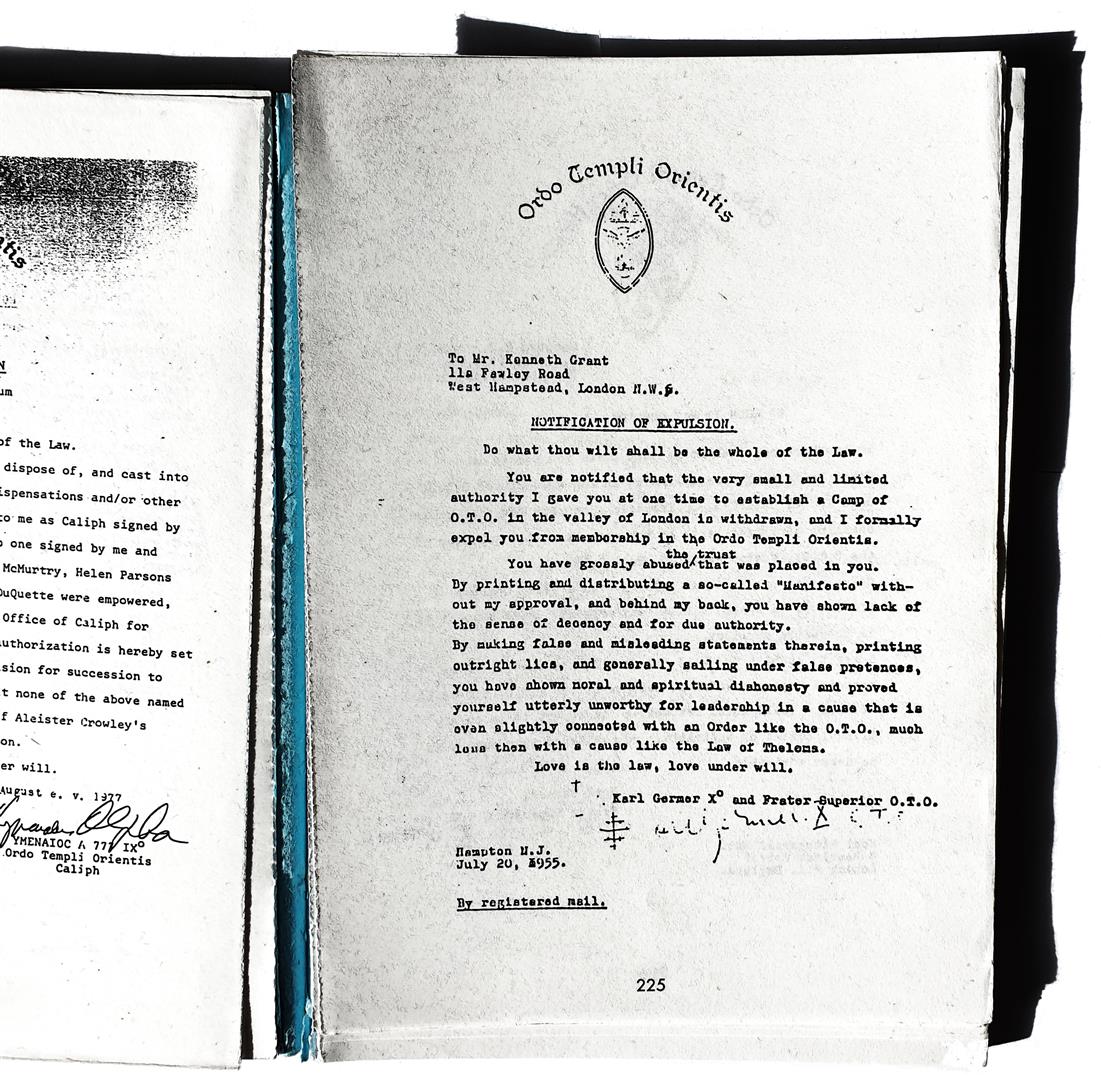
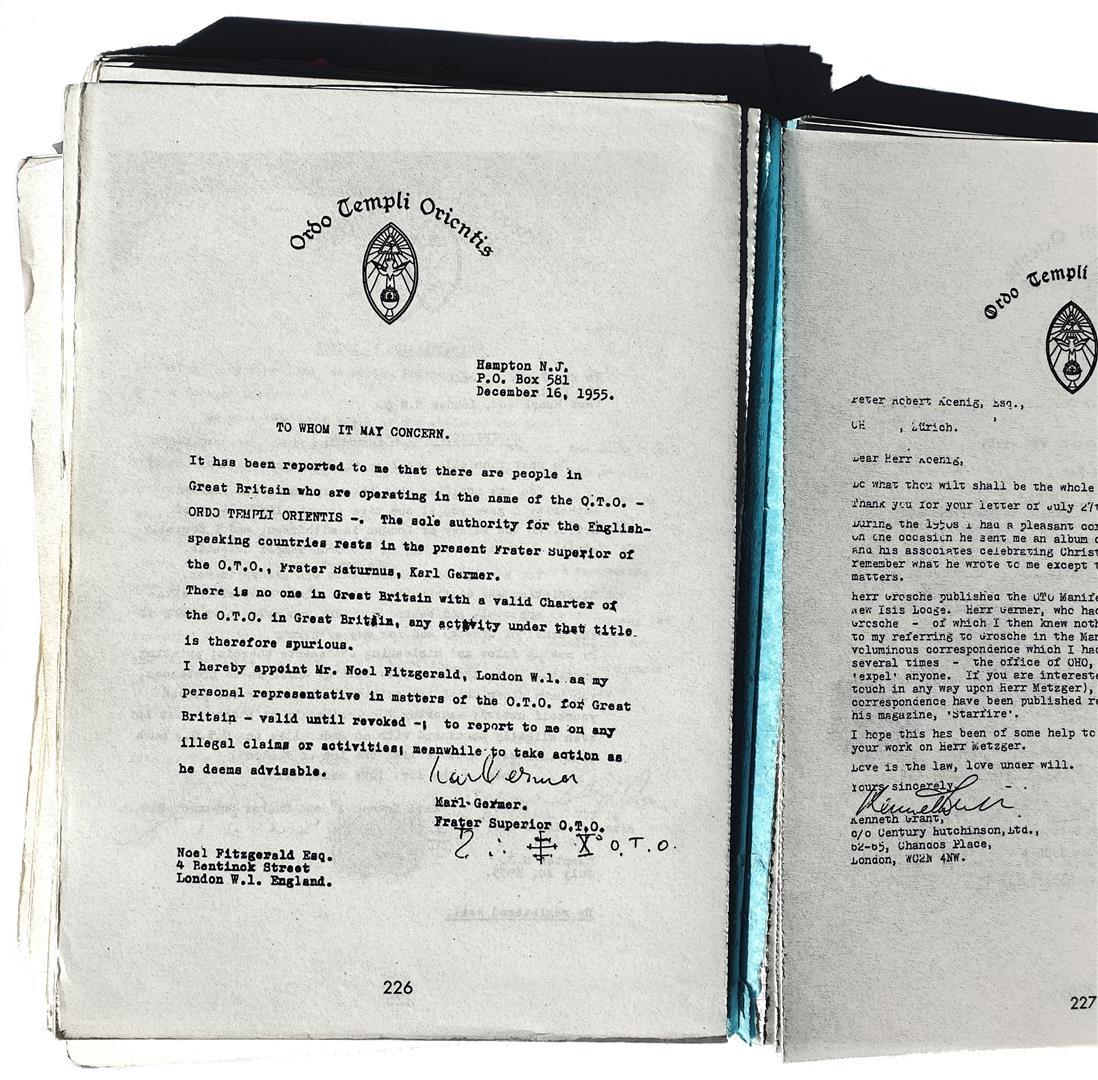
More Karl Germer documents.
Documents: Karl Germer to Kenneth Grant.
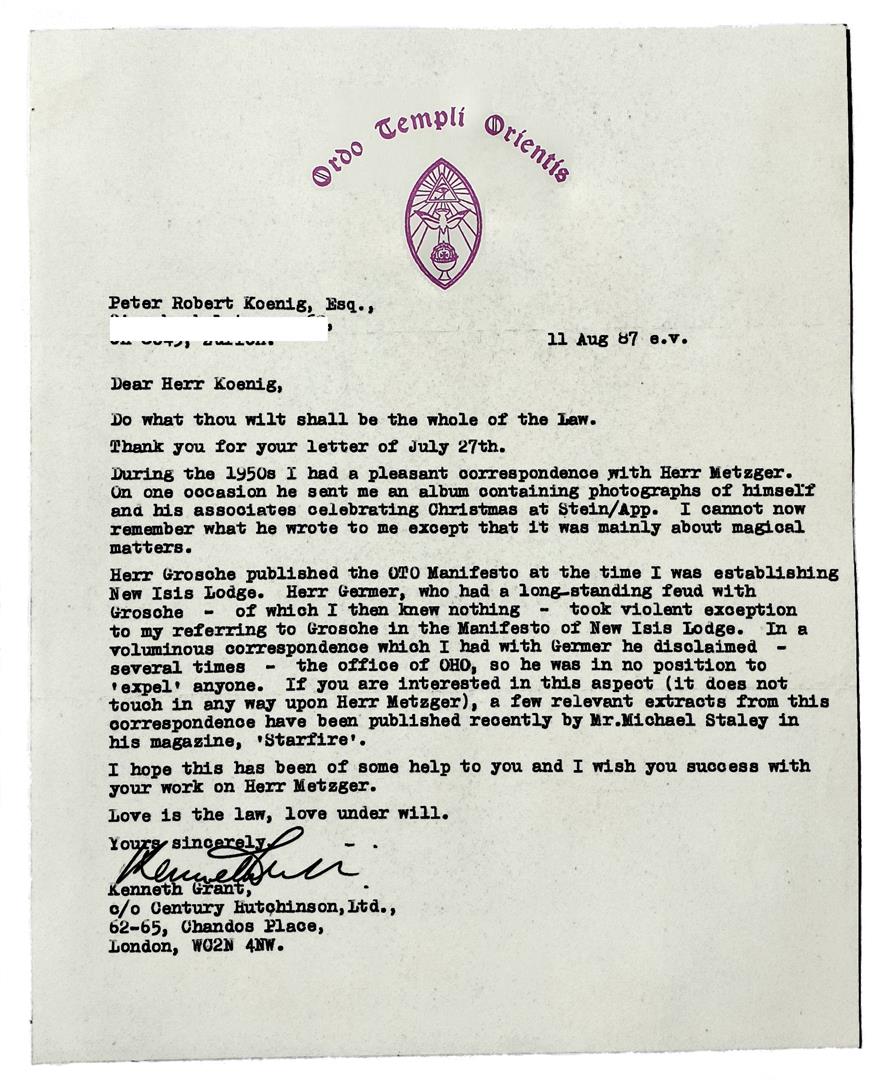
Nature of the Typhonian Order
Lam, Thelema, Maat, Spare, Parsons, Cameron, qabalistic talk, consciousness, imagination, and the inevitable Starfire apparatus.
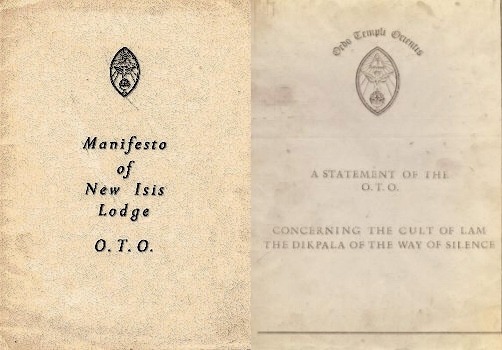
Kenneth Grant
- The Lam Statement (with permission).
- Tradução portuguesa: Concernente ao Culto de Lam.
- Russian translation: О КУЛЬТЕ ЛАМА.
Robert Taylor
Michael Staley
- The Image of LAM.
- LAM: The Gateway.
- Tradução portuguesa: LAM: O PORTAL.
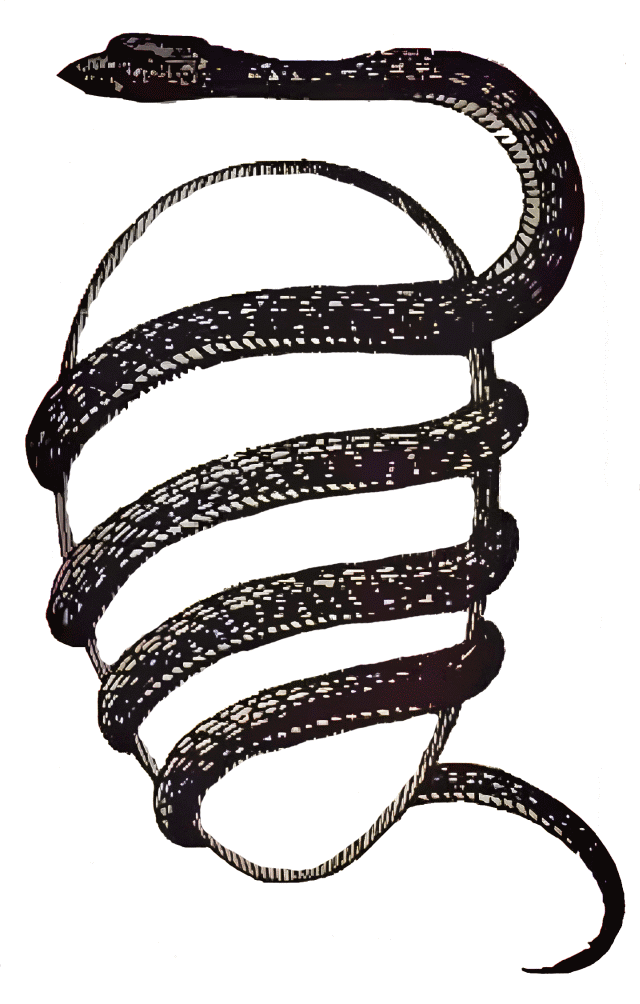
- The LAM-Serpent Sadhana.
- Tradução portuguesa: Michael Staley: Lam Workshop.
- Russian translation: МАЙКЛ СТЭЙЛИ: САДХАНА ЗМЕЯ-ЛАМА.
- The Mysteries of Lam.
- The Heart of Thelema.
- Going Beyond.
- Supping At The Angel & Feathers.
- The Babalon Working of Jack Parsons.
- More on Parsons in Nikolas and Zeena Schreck: Demons of the Flesh.
- An Appreciation of Marjorie Cameron.
- The Vision & The Voice.
- Iridescent Undulations and the Sacred Fire.
- Transformation: Austin Spare and the Besz-Mass.
Simon Hinton
- The typhonian Talk.
- Aiwass, Maat and the New Aeon.
- Some Qabalistic Considerations and Associated Initiations.
- It's all in the Mind.
- Tradução portuguesa: Sua totalidade na Mente.
- Aleister Crowley and the O.T.O..
- Liber AL Intelligence.
- Holy Guardian Angel Invocation.
- Liber Omonoia.
- Simon Hinton at MySpace.

A painting by Alastair Campbell appeared on page 40 of 'Starfire' Vol I, No.1, published in April 1986. It accompanies a poem entitled 'The Minotaur' by his partner, Ann Campbell.

Starfire and contact material
The publishing address, order channel, and surrounding visual residue from the Starfire/Typhonian orbit.
To contact the typhonian Order (T.O.T.O.) write to:
STARFIRE Publishing Ltd
BCM Starfire
London WC1N 3XX
England
Book orders: starfire.books@btinternet.com
Visit the Starfire Publishing website at
Starfire Publishing Ltd

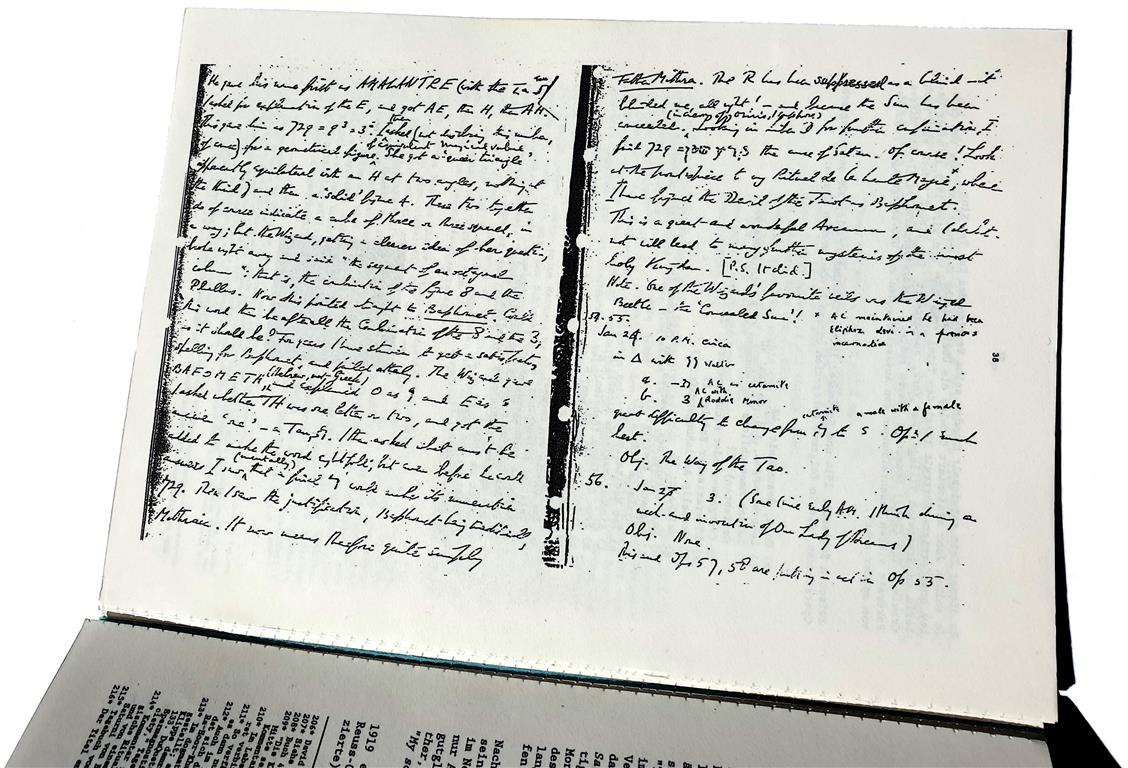
Linda Falorio, Shadow Tarot, Maat
Shadow Tarot, Mishlen Linden, typhonian teratomas, and the Maat continuum of Maggie Ingalls / Sor. Nema.

Maat continuum, Shadow Tarot: e.g. Raflifu.
Linda Falorio about the HI-Virus and sexmagick.


The MAAT Continuum
Maggie Ingalls / Sor. Nema's insights.

- Liber Pennae Praenumbra.
- Beta, a Comment on Communications from the Aeon of Maat.
- Song for Babalon.
- Feast of the Hive.

Nema explains the gnostic worldview of the Double Currents Maat and 93/Shaitan-Aiwass.
- Kingdom with the Banishing and the Invocation of Maat.
- Foundation with the Invocation of the Forgotten Ones.
- Splendor with the Masks.
- Victory with the Mass of Maat.
- Beauty with the Vortex Ritual, about the Planetary Chakras.
- Afterword and thoughts about Orders.
- PanAenoic Magick, the Invocation.
- The Priesthood — Parameters and Responsibilities.
- The Elevenstar Working.
- Maat Magick & Chaos Magick.
Nema about David Bowie's "Breaking Glass".
Loosely connected, or not?
Josh Iceton: 3rd Eye Visionary Artist, Magickian & Mystic.
Andrew Collins: Twenty-First Century GRAIL.
Fernando Liguori: Influência Tifoniana — not an official typhonian lodge or site.
A non-typhonian approach to LAM, Nuit, the Thoth Tarot deck, etc. is Claas Hoffmann's Fürst Claas vom Mars revelation in German.
Michael Paul Bertiaux and neighbouring gnostic machinery
Kenneth Grant also received some limited inspiration from Chicago–based occultist Michael Paul Bertiaux.

- The Threepenny Gnostic Opera with charters of e.g. Manuel Cabrera Lamparter, William W. Webb et. al.
- History of the Gnostic Churches related to the O.T.O. and O.T.O.A.
- Der O.T.O.A.-Reader contains a lot of further picture material.
- The Gnostic Lineages of the O.T.O.A. and related organisations and Churches.
- "Ljuben je zakon" or "ljubav pod voljom"? O.T.O. and O.T.O.A. in former "Yugoslavia".
- O.T.O. groups and O.T.O.A. in Italy.
- The History of the XI° and the Choronzon Club.
- A letter of Michael P. Bertiaux to Gary M. Kelly / Martin.
- My O.T.O.A. 1987-1991.
Caliphate and adjacent disputes
- The History of the "Caliphate": Song of the Whitewash.
- Discussions about the "Caliphate".
- How William Breeze lost an Apostolic Succession.
- Who possesses and executes the Crowley-copyrights?
- Trademark Issues 2008.
- National Grandmasters and OHOs of the O.T.O.
- Aleister Crowley's O.T.O. initiation rituals: "O.T.O. Rituals and Sexmagick".
Examples of books and magazines
Grant’s printed universe, Starfire catalogues, reviews, talks, re-editions, and the glossy paper trail of the Mauve Zone.
- Re-edition of Kenneth Grant's Outside the Circles of Time.
- Gamaliel: Diary of a Vampire.
- Beyond the Mauve Zone.
- Convolvulus.
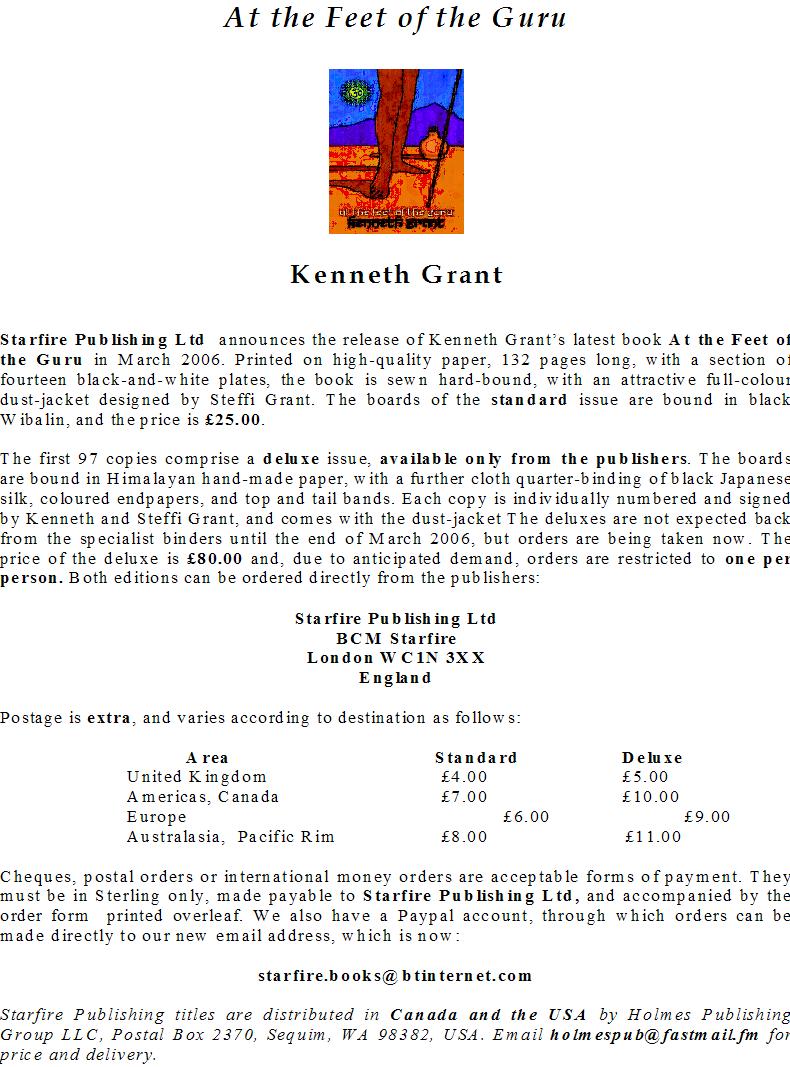
- At The Feet Of The Guru.
- The Ninth Arch: Launch and Talks about the typhonian Trilogies by Michael Staley.
- Against the Light, a review by Michael Staley.

Those of Grant's books published by Starfire Publishing Ltd can be ordered via the STARFIRE address or via email: starfire.books@btinternet.com.
Visit the Starfire Publishing website at Starfire Publishing Ltd.
Starfire Publishing Ltd announces the publication in late January 2009 of Volume Two Number Three of Starfire.
2010 catalogue of books by Starfire Publishing Ltd.

Navigation, search, and contact
A cleaner exit from the Typhonian labyrinth: search, return routes, the standard Parareligion portal block, and the final mail button.
Search Parareligion
Return routes
Use the main exits if the page has done what Typhonian pages do best: multiply corridors.