Theosophy before the later initials began to glow
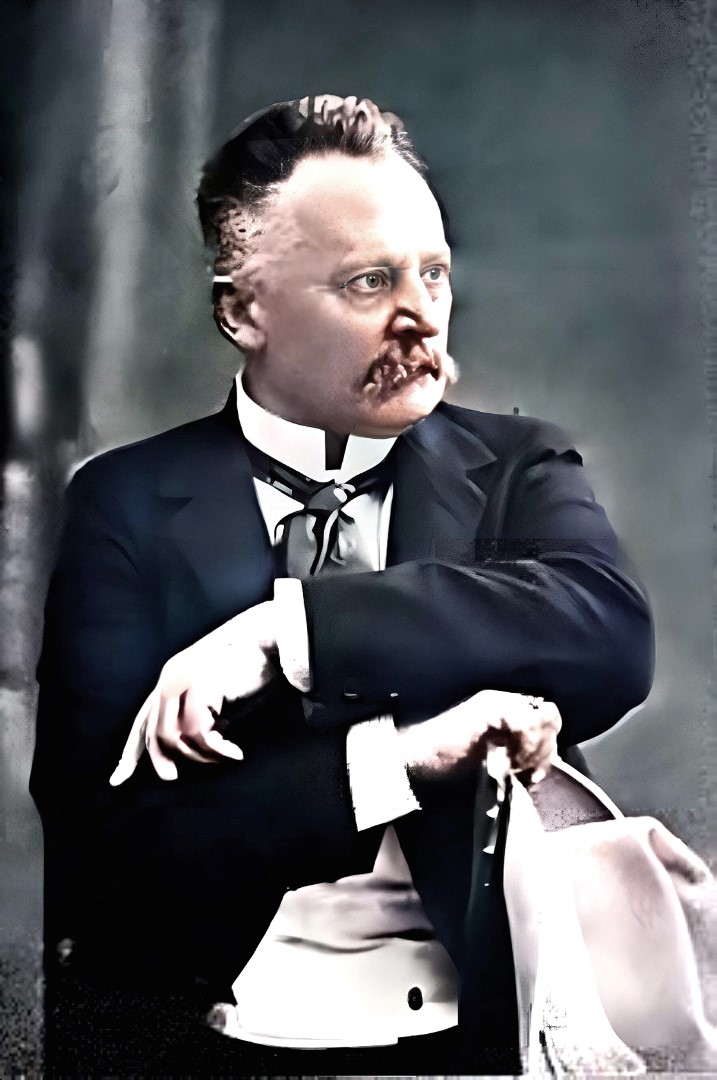
In 1875, the Theosophical Society was founded by H.P. Blavatsky, H.S. Olcott, W.Q. Judge and others. After Blavatsky died in 1891, the Theosophists split into a number of factions, and by 1900 consisted of several competing currents. One of the German-speaking figures in this landscape was Franz Hartmann, who moved between theosophical, Rosicrucian, pseudo-Masonic and völkisch-adjacent milieus with the ease of a man for whom a new lodge was not yet a bureaucracy, but a possibility.
Although Blavatsky had thought him “a bad lot”, and he had been nicknamed “dirty Franz” by some Theosophists because of his greasy hair, unkempt appearance, and notorious meanness with money, Hartmann obviously made a good impression on Carl Kellner. Kellner considered Hartmann an exalted Rosicrucian, a high occult initiate, and a philosophical genius, treating him as a valued friend rather than a decorative extra in the occult theatre.
Hartmann played an important rôle on the Viennese esoteric scene, introducing the culturally influential polymath and historian Friedrich Eckstein, friend and occasional collaborator of Sigmund Freud, and Eckstein’s wife, known as the author “Sir Galahad”, to the Theosophical Society there. He also interested Kellner and his wife in Theosophy and introduced Kellner to a number of Indian contacts. In 1896, Kellner became acquainted with a certain “Mr. Bheema Sana Pratapa from Lahore”, later mentioned in Kellner’s pamphlet on Yoga. Kellner and Hartmann presented Pratapa at a Psychological Congress in Munich, where he gave demonstrations of Yogic exercises.
Kellner supported the impecunious Hartmann by giving him a sinecure as director of the Lahmann Sanatorium at Hallein in Austria, where patients suffering from lung ailments such as tuberculosis and whooping cough were treated with Kellner’s “Ligno-Sulphite Inhalation Treatment”. This is not yet O.T.O. history. It is the older theosophical-medical-occult compost from which later claims grew, sometimes honestly, sometimes with a most entrepreneurial fog-machine.
Theodor Reuss, Memphis-Misraim, and Hartmann’s vanishing co-leadership
The pseudo-Masonic Rite of Memphis and Misraim in Germany was led by Theodor Reuss, Franz Hartmann, and Heinrich Klein. Kellner subsidised the whole concern, but remained in the background as far as leadership was concerned. Reuss and Kellner soon disagreed about practical aspects of Hatha-Yoga; Hartmann, then in charge of the Leipzig Theosophists, thought that his friend Kellner was being taken for a ride by “false Yogis”.
Hartmann also parted company with Reuss in 1904, which led to growing difficulties among the Memphis-Misraim leadership. On 7 June 1905, Carl Kellner, “Honorary Grand Master” 33°, 90°, 96°, “director” of the “inner triangle” or “occult circle” consisting of Hartmann, Reuss, and Kellner himself, died. From this time onwards Hartmann severed all connections with Reuss, but because Hartmann was still legally a co-leader of Memphis-Misraim, Reuss was compelled to have Hartmann’s signature on warrants, charters, and other official papers. A close examination of these documents shows that Reuss used a rubber-stamp facsimile of Hartmann’s signature.
There is still ample extant evidence of the quarrel. On 17 March 1906, Reuss wrote to Hartmann complaining about Hartmann’s assumption that Reuss had “nothing more to do with the signing of diplomas”, and that Reuss had concluded Hartmann had withdrawn from his Memphis-Misraim Free Masonic Order. In a letter dated 11 February 1910, Reuss informed Rudolf Steiner that Hartmann had “not been inside a Masonic lodge” since seeing Reuss’s lodge in Berlin in 1904, and that Hartmann was, in any case, “no authority on it”.
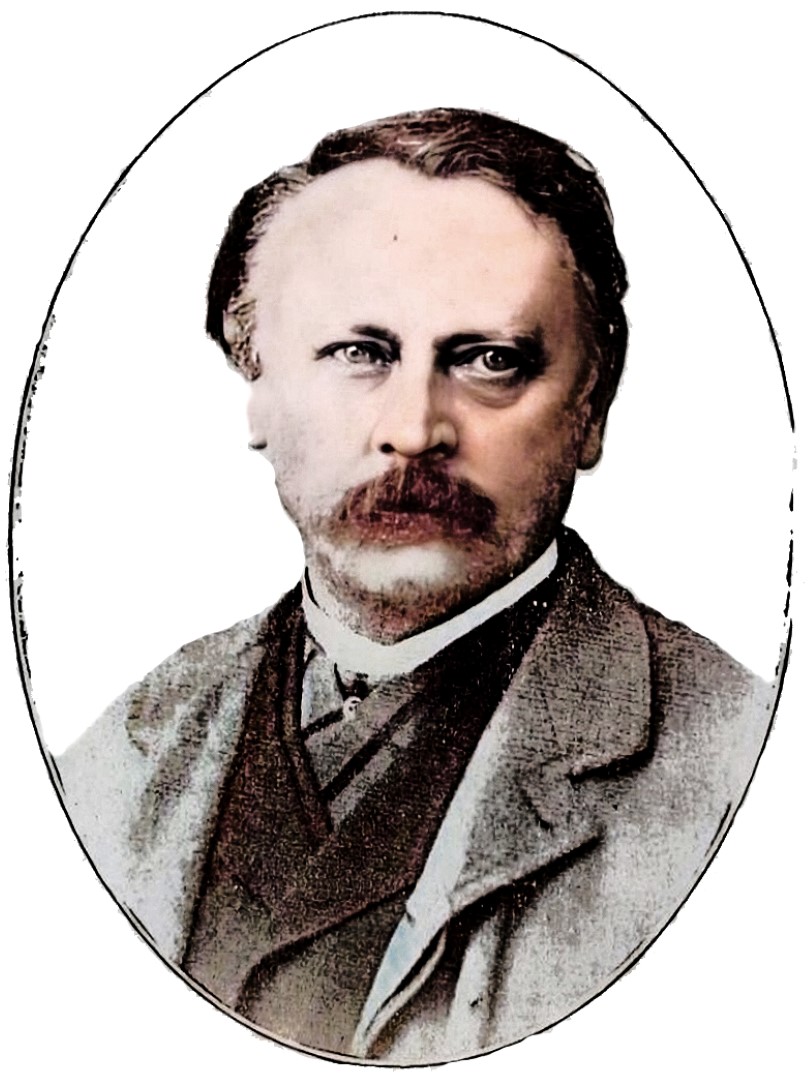
On 7 August 1912, Hartmann died, and the last potential impediment to Reuss’s Memphis-Misraim activities was removed. Reuss now claimed that Hartmann had been a “co-founder of the O.T.O.” Hartmann was hardly in a position to deny the assertion. Like Kellner and Steiner, Franz Hartmann was never a member of any version of the O.T.O.
Rudolf Steiner enters by another door
The Steiner material sharpens rather than softens the point. Steiner became General Secretary of the German Section of the Theosophical Society in 1902; his Berlin theosophical work developed in a field already crowded with rival organisations, Leipzig circles, Hartmannian survivals, small papers, occult pamphlets, and the usual promise that the Absolute can be administered with a membership ledger.
The Rudolf Steiner Archive gives the decisive chronology for the Memphis-Misraim contact. Steiner’s first conversation with Reuss is placed between 15 September and 9 December 1904; Steiner and Marie von Sivers joined the Memphis-Misraim Order on 24 November 1905; the contract with Reuss was concluded on 3 January 1906. The contract concerned authorisation to run a symbolic-cultic working group under the Memphis-Misraim framework — not a documented admission into any O.T.O.
This matters for Hartmann because the Reuss-Hartmann rupture and the Reuss-Steiner arrangement overlap chronologically without becoming the same thing. Hartmann had already withdrawn from Reuss’s active Masonic work; Steiner’s later “Mystica Aeterna” orbit was a separate arrangement, framed through Theosophy and Misraim, not through the retrospective glamour of O.T.O. initials.
The documentary record on parareligion.ch remains the cleanest warning label: no evidence shows that Steiner accepted anything from Reuss beyond permission to use the term “Misraim”; no documentation makes Steiner an O.T.O. member. The same negative precision applies to Hartmann. The dossier therefore closes not with a discovery of membership, but with a more useful correction: Hartmann was an enabling name, an older theosophical authority, and later a posthumous convenience in Reuss’s symbolic bookkeeping.
The additional material
The additional material above was checked against sources outside O.T.O.-organisational self-presentation. O.T.O.-PR pages were deliberately avoided; parareligion.ch is used here as the archival home-base, not as institutional advertising.
- Two letters from Theodor Reuss concerning Franz Hartmann / Rudolf Steiner
- Rudolf Steiner — Never a member of any Ordo Templi Orientis
- Rudolf Steiner Archive: preliminary remarks to GA 265
- Rudolf Steiner Archive: contract between Theodor Reuss and Rudolf Steiner
- Goetheanum chronology: Rudolf Steiner and the Theosophical Society
- Freimaurer-Wiki: Memphis und Misraim
Translated by Mark Parry-Maddocks.
Two letters from Theodor Reuss concerning Franz Hartmann / Rudolf Steiner.
Back to the main page about Carl Kellner.
Biographies of Carl Kellner + Theodor Reuss.